Last updated October 31, 2026
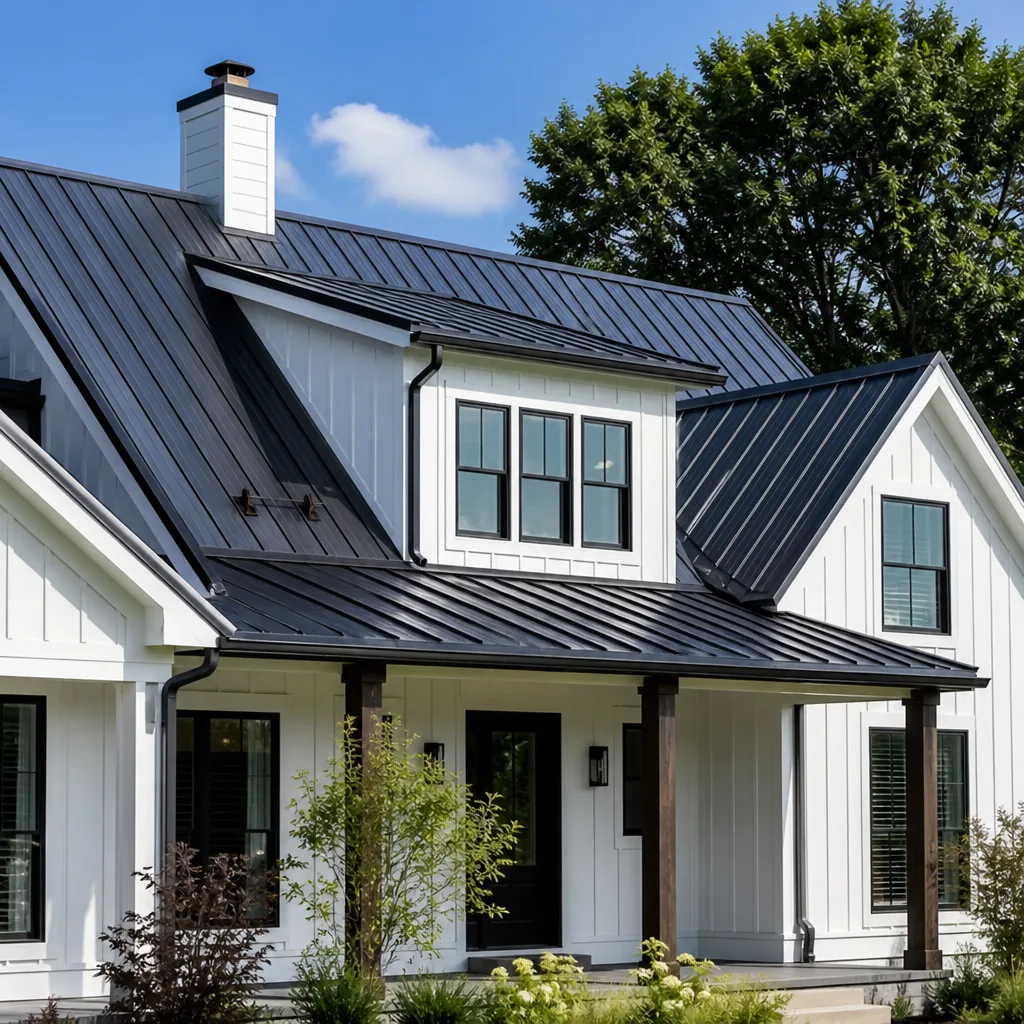 Metal roofing
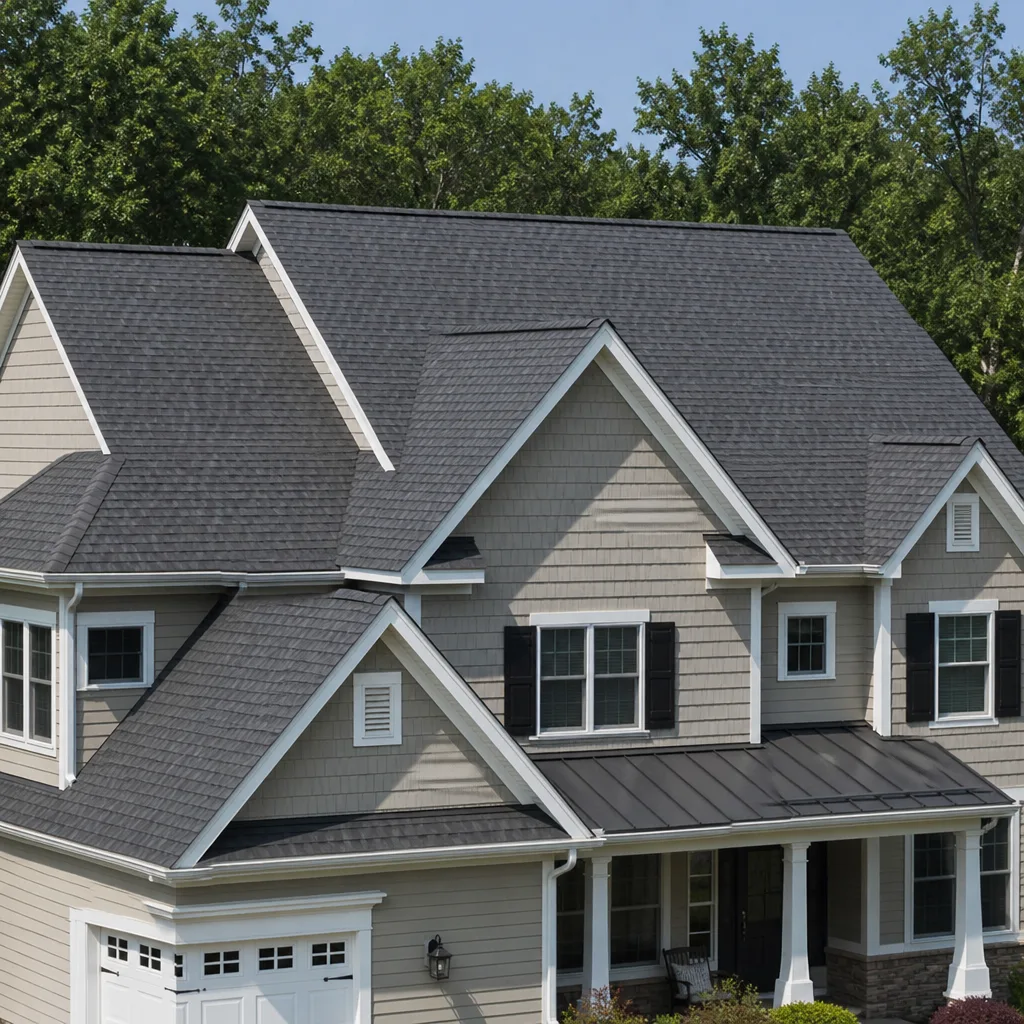 Architectural shingles
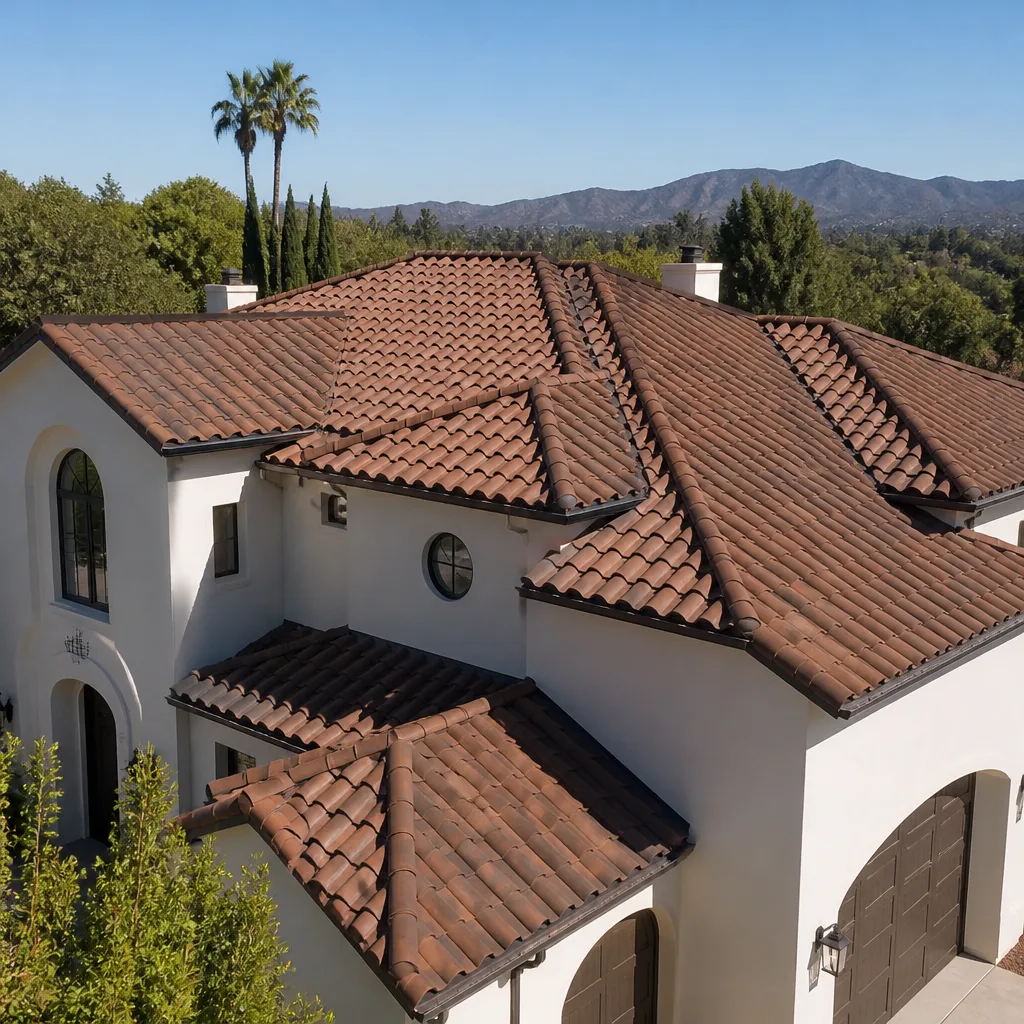 Tile roofing
 GAF
 Owens Corning
 Flat & low-slope
Free roof inspection with deck photos before we talk money - GAF and Owens Corning certified installation
Roofing Permits, Codes & Inspections in CA: What You Need to Know
Here’s a number most homeowners never hear until it’s too late: the City of Los Angeles issues roughly 25,000 re-roofing permits a year, and a meaningful share of them are pulled after work has already started because a neighbor called it in. If you live in Van Nuys, you’re not dealing with a small suburban building department. You’re inside the LADBS system, one of the largest and most rule-dense permitting operations in the country, with inspection quotas, online plan check portals, and a correction cycle that can stall a roofing project for weeks when a detail gets missed. This guide walks through exactly when a permit is required, what California codes actually govern your roof, how the LADBS inspection sequence works, and what to do if an unpermitted roof is discovered during a sale. For more guides & resources on Van Nuys roofing, see our blog. If you’ve got a roof decision coming up in Van Nuys, this is the straight version of what you’re walking into.
Quick Answer
Roofing permits in California are handled by local building departments, not the state, and in Van Nuys that means LADBS. Most full reroofs require a permit, an LADBS inspection at two to three stages, and compliance with California Title 24 cool roof and energy standards. Repair work that replaces only a section of roofing and does not touch more than 25% of the roof surface within a 12-month period often qualifies as a repair exemption, but the definition is stricter than most homeowners assume. A permitted, inspected roof protects your insurance position and your title; an unpermitted one quietly puts both at risk.
Styles & brands we work with
Table of Contents
- When a Roofing Project Triggers a Permit in Los Angeles
- How California Title 24 Energy Compliance Affects Roofing Material Choices
- The LADBS Inspection Sequence for a Full Reroof
- Wildland-Urban Interface (WUI) Zones and How They Change Material Requirements
- Unpermitted Roofing Work: What Happens During a Sale or Insurance Claim
- What Roofing Permits Actually Cost in Los Angeles
- Common Mistakes to Avoid
- When to Call a Professional
When a Roofing Project Triggers a Permit in Los Angeles
A roofing permit is required in Los Angeles when the work involves replacing the roof covering (shingles, tile, membrane, or metal panels) on an area greater than 25% of the roof surface within any 12-month period. That threshold is the one most homeowners get wrong. It’s not about whether you’re doing a “full reroof” versus a “repair” in the conversational sense. It’s about square footage and time. Patch a leak on a 2,000-square-foot roof by replacing 300 square feet of shingles? That’s repair, no permit. Replace 600 square feet after storm damage? Now you’ve crossed 25% of a 2,000-square-foot roof, and an LADBS permit is technically required, even though the work is only a partial replacement.
There’s a second trigger that catches people: structural work. If the roof deck sheathing is being replaced, if rafters or trusses are being modified, or if the roof is being converted from one material system to a heavier one (composition shingle to tile, for example), the permit requirement attaches regardless of square footage. A tile roof weighs substantially more per square than an asphalt shingle roof, and the existing framing may not be sized for that load. Los Angeles code requires a structural check in that scenario. Van Nuys homes built in the 1950s and 1960s, which make up a large share of the housing stock south of Victory Boulevard, often have rafter spacing that was fine for wood shake or lightweight shingle but marginal for tile without reinforcement.
What about a like-for-like shingle replacement on a small slope, under 25% of the roof area, no structural change? That is generally an exempt repair under LADBS policy. But the exemption lives in a gray zone. The city’s official position is that reroofing requires a permit; the 25% repair threshold is a widely applied interpretation, not a bright-line statute. An inspector who sees stacks of new shingles on a roof without a posted permit will not stop to measure square footage before issuing a stop-work order. If you’re anywhere near the line, the safer play is a $400 to $600 permit rather than a $1,500 correction plus fines.
One more Van Nuys specific point: multi-family properties. Van Nuys has a high concentration of duplexes, fourplexes, and small apartment buildings between Vanowen Street and Sherman Way. For any residential property with three or more units, LADBS treats the building as commercial under the permit code, which changes the plan requirements and sometimes triggers more involved review. A two-unit duplex on a single lot still falls under residential rules in most cases, but the moment a third unit appears, the project moves into a different permitting lane.
How California Title 24 Energy Compliance Affects Roofing Material Choices
California’s Title 24 Building Energy Efficiency Standards apply to roofing in one specific way that changes what you can put on your house: the cool roof requirement. For residential re-roofing projects that replace more than 50% of the roof area, or where the building is in a climate zone that triggers the requirement, the new roofing material must meet minimum solar reflectance and thermal emittance values. The short explanation: your roof has to reflect enough sunlight to reduce cooling load, which is an energy policy mandate, not a style preference.
In practice, this means the color and type of roofing material you choose is partially regulated. Dark asphalt shingles are not categorically banned, but many standard dark shingle products fail the Title 24 cool roof thresholds for steep-slope residential reroofing. Products that carry the CRRC (Cool Roof Rating Council) label with the required aged reflectance values become the default choice. This is where the multi-brand approach matters. GAF, CertainTeed, Owens Corning, and IKO each produce CRRC-rated cool roof shingle lines, and their compliance paths differ. See our Choosing the Right Roofing Brand: A Buyer’s Guide for Van Nuys for a deeper comparison of how these manufacturers stack up on cool roof performance. CertainTeed’s Landmark Solaris series uses advanced granules to meet reflectance on darker colorways, while Owens Corning’s Duration Cool series takes a different technical approach. A roofer who only installs one brand will steer you to whatever that manufacturer sells; a crew that works across brands can tell you which product meets Title 24 in the color you actually want.
Title 24 also touches insulation. If your re-roofing project exposes the attic and the existing insulation is below current R-value minimums for climate zone 9 (which covers Van Nuys), the city may require insulation to be brought up to standard before the roof inspection passes. This catches a lot of homeowners off guard because the roof quote didn’t include attic work. It’s a code requirement, not an upsell, and it shows up in the inspector’s notes. For homes built before 1978, which is a large share of Van Nuys inventory, attic insulation is frequently at R-11 or lower when current code demands R-30 or better. Our Seasonal Roofing Care for Van Nuys: Year-Round Homeowner’s Guide covers when to check insulation as part of routine maintenance.
There are exemptions. Low-slope roofs with a pitch under 2:12 are already required to use cool roof materials in most California climate zones, so that’s not a change. Historic buildings with Mills Act contracts or homes in designated Historic Preservation Overlay Zones may receive exemptions from some Title 24 roof requirements, but that comes through a formal review, not an automatic pass. Van Nuys has fewer designated historic structures than central Los Angeles, but individual properties can still qualify. If your home is on a historic register, verify the exemption before you buy materials.
The LADBS Inspection Sequence for a Full Reroof
The LADBS inspection process for a permitted re-roof follows a fixed sequence. Skipping a step or getting the order wrong is the most common cause of failed inspections and two-to-three-week delays. Here’s exactly what to expect on a standard residential re-roof in Van Nuys:
Step 1: Permit Issuance and Plan Review
Your contractor (or you, if owner-builder) submits the permit application through the LADBS online portal. For a straightforward like-for-like reroof with no structural changes, the permit is typically issued over the counter or within a few days online. If the project includes structural changes, load increases, or falls within a WUI zone (more below), plan review enters the queue and can take anywhere from one to four weeks depending on LADBS workload.
Step 2: First Inspection – Roof Deck and Underlayment
Once the old roof is torn off, the inspector comes out to check the roof deck before new materials go down. They’re looking at deck condition, fastener schedule, underlayment type and overlap, and valley flashing installation. If the deck has rot or delamination, the inspector can require replacement of affected sheathing before the project proceeds. This is the inspection that catches unplanned deck repairs, which is why any honest roof quote should include a contingency for deck replacement. In Van Nuys, with its occasional Santa Ana wind events and periods of heavy winter rain, deck deterioration is more common than homeowners expect, especially on older composition roofs that have trapped moisture. For Roofing Warning Signs: A Van Nuys Homeowner’s Reference Guide, see our earlier post on spotting trouble before the inspector does.
Step 3: Second Inspection – Roof Covering and Flashings
After the new roof is fully installed but before the permit can be finaled, the inspector returns to verify the roof covering installation. They’re checking nailing patterns (every shingle manufacturer publishes a specific nail count and placement), flashing at penetrations, pipe boot condition, ridge cap installation, and edge details. If you chose a product from GAF, IKO, or any of the major manufacturers, the nailing pattern required by that manufacturer is the one the inspector will reference. Using a crew that knows the spec differences between brands matters at this stage; a generic installation can pass code but void the manufacturer’s wind warranty.
Step 4: Final Sign-Off
Once the covering inspection passes, the permit is signed off. This is the moment the project becomes legally complete. The finaled permit is the document that proves to a future buyer, an insurance adjuster, or a title company that the roof was installed lawfully. Keep it with your home records. Without it, the roof is in a legal gray zone even if the work was done perfectly.
The Roof Replacement in Van Nuys process always includes this permit sequence when the project crosses the threshold. Our team handles the full cycle, including scheduling inspections and being on site for the inspector. If you’re considering a replacement, the permit paperwork should be part of the contract, not a separate headache you inherit.
Wildland-Urban Interface (WUI) Zones and How They Change Material Requirements
Parts of Van Nuys fall within a Wildland-Urban Interface overlay zone, which is a fire safety designation that adds material and construction requirements on top of standard building code. The WUI conversation matters because it changes what roofing materials you’re allowed to install, and many homeowners only discover this after they’ve already picked a product.
WUI zones require Class A roof assemblies. In plain terms: the roof covering must carry a Class A fire rating under ASTM E108, meaning it resists severe fire exposure without igniting or spreading flame. Many asphalt shingle products meet Class A on their own, which is why composition remains the dominant roof in Van Nuys. But once you move into certain metal systems, some tile profiles, or any material that requires an underlying assembly detail to achieve Class A, the specification becomes more particular. An unrated wood shake roof, common on Van Nuys homes from the post-war era, cannot be legally replaced with another unrated wood shake roof in a WUI zone. A homeowner who loves the wood look finds themselves looking at composite shake products instead, which is a conversation we have regularly.
The WUI overlay also adds requirements for roof edge details, gutter guard provisions, and sometimes eaves and soffit construction, not just the roof covering itself. The specific map boundaries shift, and the City of Los Angeles updates its WUI maps periodically. Van Nuys neighborhoods bordering the Sepulveda Basin and the hillsides north of Burbank Boulevard are more likely to fall inside the overlay than the flatlands south of Victory Boulevard, but the only way to know for sure is a parcel lookup through LADBS.
A material-neutral roofing contractor is especially useful in WUI zones. GAF and CertainTeed both produce Class A asphalt shingle lines that are straightforward WUI approvals. IKO’s Nordic line and Owens Corning’s Duration series are also Class A rated. The choice comes down to color, warranty, and wind rating for the specific exposure. A roofer locked into one brand has one answer; a multi-brand crew can match the WUI requirement with what the house actually needs, and what the homeowner actually wants to look at for the next thirty years.
If your home is in a WUI zone, the permit plan check will flag it, and the inspector will confirm the roof covering rating during the final inspection. You cannot negotiate your way around this one. The material either carries the rating or the inspection fails.
Unpermitted Roofing Work: What Happens During a Sale or Insurance Claim
Unpermitted roofing work is the most common title defect discovered in Van Nuys home sales. Here’s the scenario we see repeatedly: a homeowner does a full reroof ten years ago without a permit, the work was fine, nothing happened, and then the house goes on the market. The buyer’s home inspector flags the roof as newer than the permit records show. The escrow company or title insurer asks for the permit. It doesn’t exist. The sale stalls.
The resolution path is a process called permit after the fact, or legalization. LADBS allows a homeowner or contractor to apply for a permit on work already completed. The catch: the inspector has to be able to see the work. For a roof, that can mean partial disassembly to expose the underlayment and deck, depending on the inspector’s requirements. If the inspector cannot verify what’s underneath the surface, the legalization becomes more involved and sometimes requires removing sections of the roof. This is not a cheap fix.
Insurance is the other trigger. A homeowner files a claim for roof damage after a storm. The adjuster checks the permit history as part of the claim review. If the roof was replaced without a permit, the claim can be denied on the ground that the work was not lawfully completed. Some policies contain explicit language excluding coverage for unpermitted work. Even policies without that language have been used to deny roof claims where the unpermitted work created the condition being claimed. It’s a quiet risk that sits on the title until someone asks the question.
If you’re buying a home in Van Nuys and the seller discloses a recent roof without a permit, or the roof age on the disclosure doesn’t match the visual condition, that’s a sign to dig deeper before closing. A roof inspection from a contractor who knows the LADBS permit system can identify what’s been done and what it will take to legalize it. The Roof Inspection in Van Nuys we offer as a standalone service exists precisely for this situation: an honest condition and compliance assessment before you’re locked into a purchase.
What Roofing Permits Actually Cost in Los Angeles
Permit fees in Los Angeles are calculated on a sliding scale based on project valuation, not a flat fee. For a standard residential re-roof in Van Nuys, here’s the range we see on actual permits pulled in the last two years:
| Permit Component | Typical Cost Range |
|---|---|
| Residential re-roof permit fee (single-family) | $350 – $650 |
| Plan check fee (if structural review required) | $150 – $400 |
| State and local surcharges | $25 – $75 |
| Inspection fees (usually bundled into permit fee) | Included |
| After-the-fact penalty (if applied) | 2x to 3x the base permit fee |
Those costs sit on top of the roofing work itself. A $14,000 re-roof in Van Nuys becomes a $14,500 project with permit fees. The permit is not where the financial risk lives; the risk lives in the consequences of skipping it. A failed sale due to an unpermitted roof is a five-figure problem. A denied insurance claim is potentially six figures. The permit is the least expensive line item on a roof and the one that protects everything else.
Here’s a sequence worth understanding:
- Contractor obtains permit from LADBS before any materials are delivered
- Permit card is posted on the job site and remains until final sign-off
- Each inspection stage happens in order (deck, covering, final)
- Inspector signs the final, permit is closed, documentation is recorded
If a roofing contractor suggests skipping the permit to save money, walk away from that contractor. They’re not saving you money; they’re transferring risk to you and keeping the savings for themselves. A legitimate Roof Repair in Van Nuys or replacement quote includes permit fees as a line item, clearly stated.
Common Mistakes to Avoid
- Assuming “small repair” means no permit. The 25% threshold is the rule, not the size of the patch. Multiple repairs in the same 12-month period can be aggregated by LADBS and treated as unpermitted reroofing. Track your repair work by square footage, not by project count.
- Skipping the permit to sell faster. The most common reason homeowners in Van Nuys skip permits on reroofing is a pending sale with a short timeline. The irony is that the unpermitted roof becomes the reason the next sale stalls, compounding the original decision.
- Hiring a contractor who doesn’t schedule inspections. A permit that was pulled but never inspected is functionally an unpermitted roof. LADBS records will show an open permit, which is often worse than no permit for title purposes because it signals incomplete work.
- Choosing roofing materials based on color before checking Title 24. Buy the dark shingle first, then find out it doesn’t meet cool roof requirements for your reroof, and you’re stuck with a product you can’t legally install. Check compliance before you commit to a color.
- Ignoring WUI zone requirements. Not every Van Nuys home is in a WUI overlay, but enough are that assuming you’re outside it is a gamble. Check the parcel before you choose materials, especially for anything wood or wood-look.
- Treating the deck inspection as a formality. The deck inspection is where the scope changes. Rotted sheathing, inadequate nailing, and undersized rafters all get flagged here, and the fix adds cost mid-project. A good roof quote accounts for this before the tear-off begins.
- Not keeping the finaled permit. The final sign-off is the legal proof the work was done properly. Without it, you’re back in the unpermitted gray zone when you sell, even if you paid for a permit and passed inspections. Keep a copy with your property records.
When to Call a Professional
You need a roofing contractor who understands LADBS permitting, Title 24 compliance, and the specific inspection sequence when: you’re planning a full reroof in Van Nuys, your roof is over 20 years old and you don’t know what’s under the surface, you’re buying or selling a home with a roof of uncertain permit status, you’re in a WUI zone and unsure what materials are allowed, or you’ve been told by an inspector that your existing roof has an open permit that needs resolution. These situations carry real financial risk when handled incorrectly.
Van Nuys Roofing Co offers free estimates in Van Nuys. We work across seven major roofing material brands – GAF, CertainTeed, Owens Corning, IKO, Atlas, Tamko, and Boral – which means the material conversation starts with what your roof needs and what the code requires, not with what we happen to stock. Call (866) 321-6172 to schedule a roof inspection or a replacement estimate. We inspect first, recommend second.
See the difference
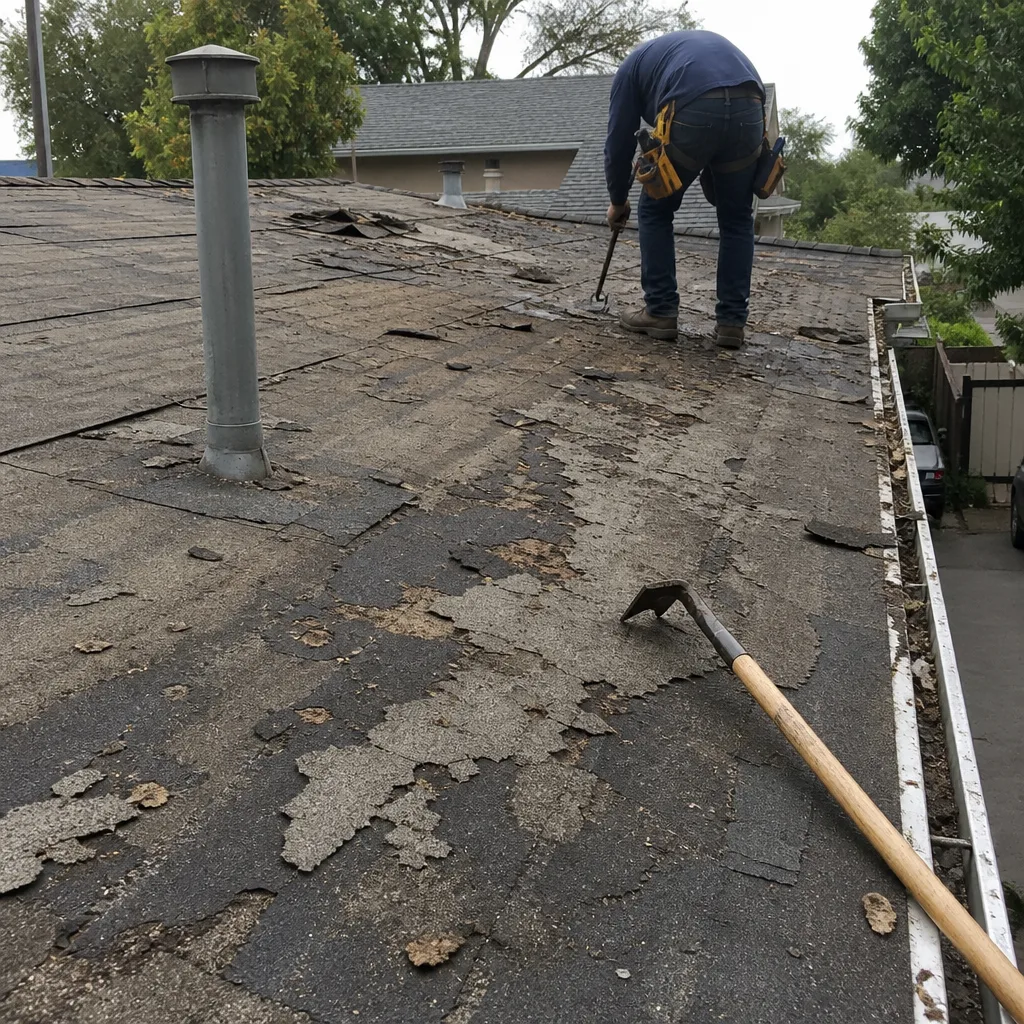 Before
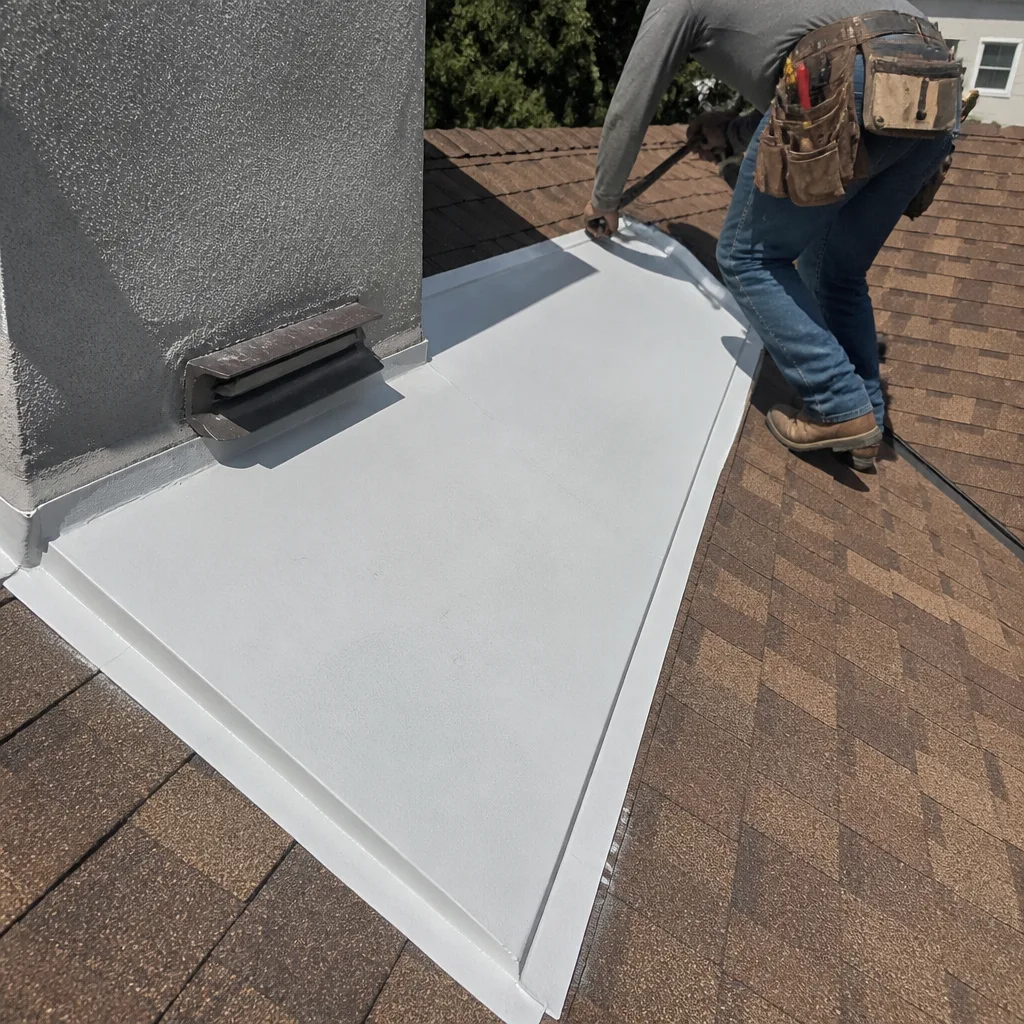 After
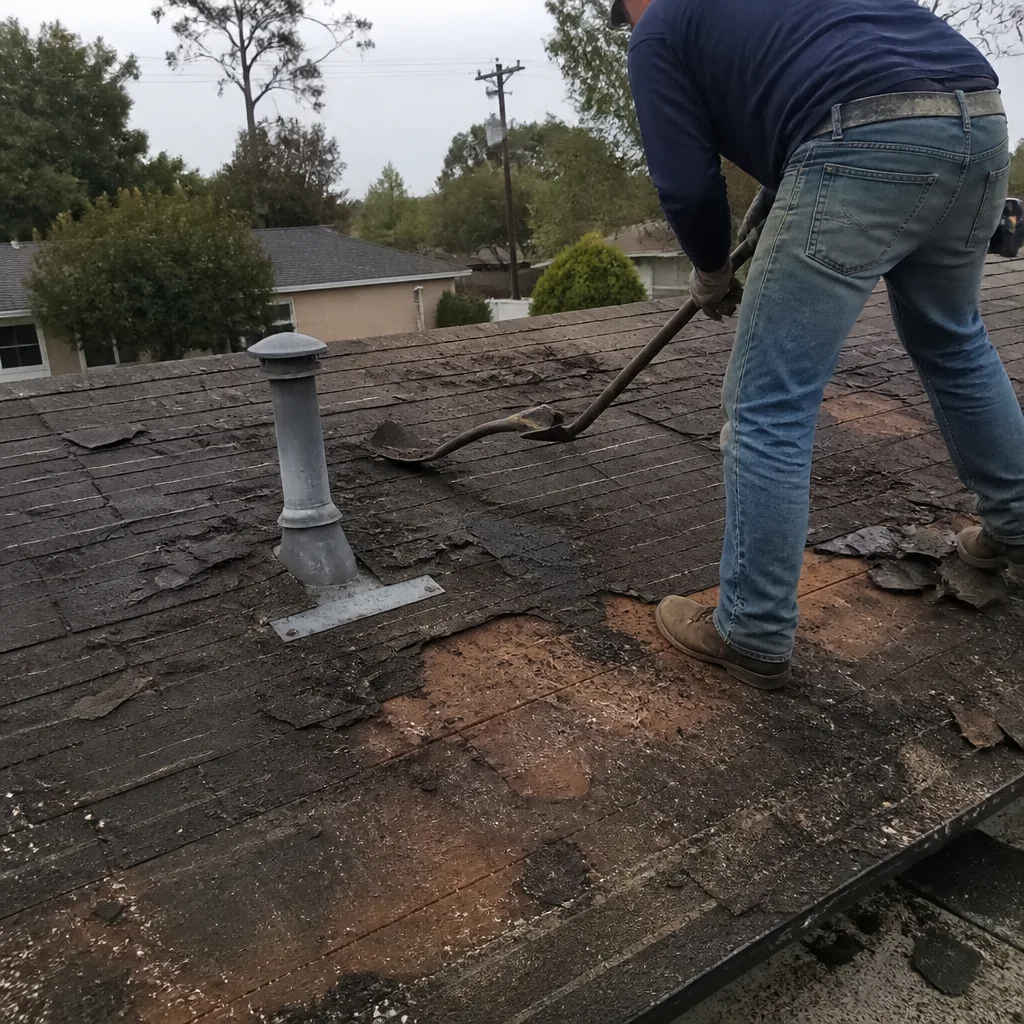 Before
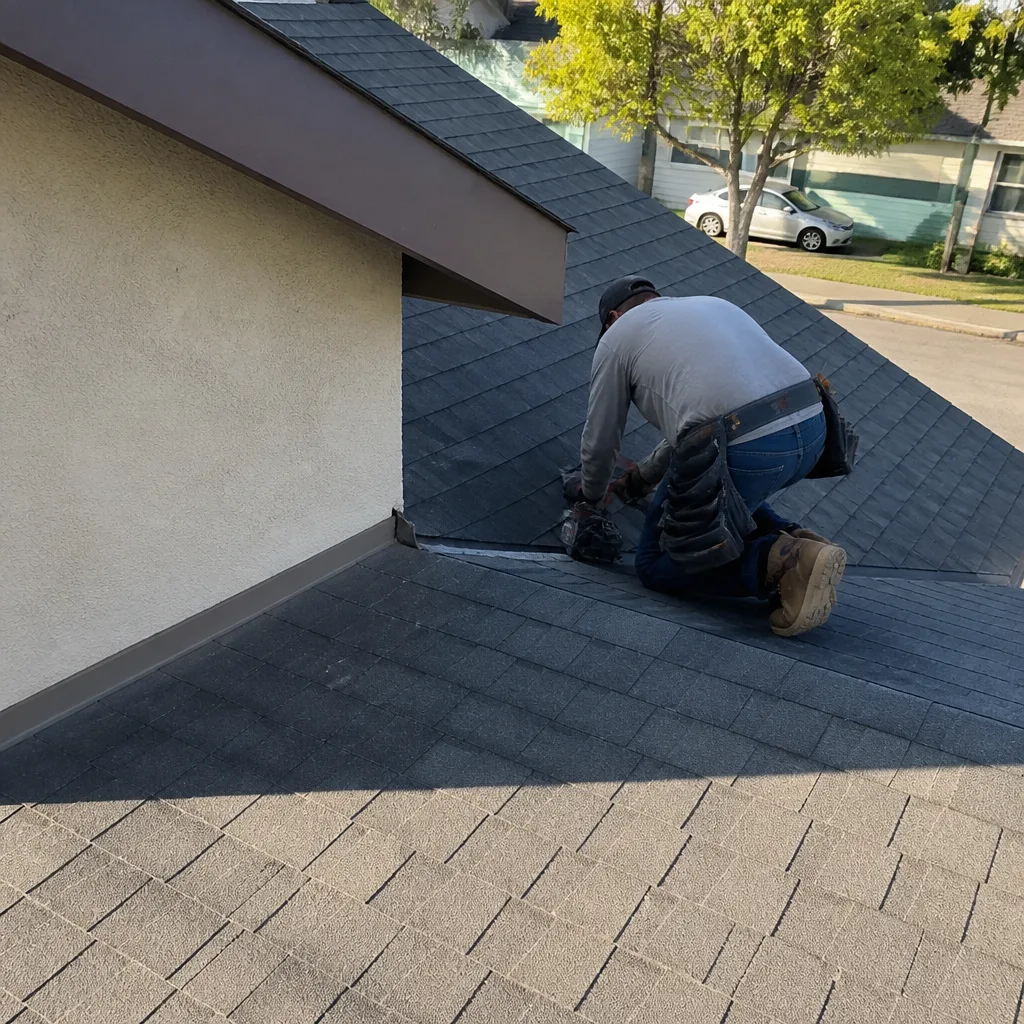 After
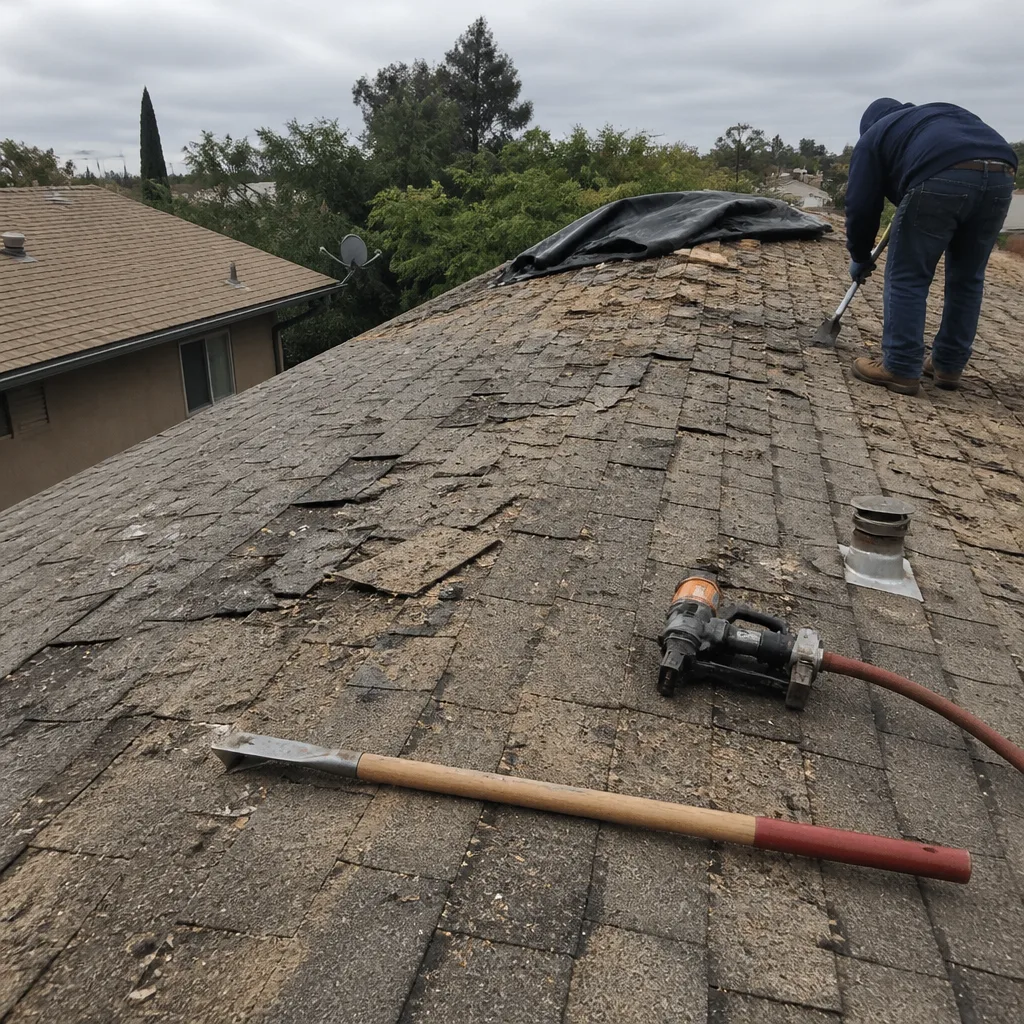 Before
 After
Frequently Asked Questions
Yes, if the work covers more than 25% of the roof surface in a 12-month period or involves structural changes to the roof deck or framing. A full reroof always requires an LADBS permit. Repair work under the threshold, where only damaged sections are replaced and no structural elements are touched, qualifies as an exempt repair in most cases. When in doubt, pulling the permit is the cheaper option.
A standard residential re-roof permit in Los Angeles typically runs $350 to $650 in permit fees, with an additional $150 to $400 if plan review is required for structural or WUI review. After-the-fact permits are penalized at two to three times the base fee. Call (866) 321-6172 if you want a specific estimate for your project.
The inspector checks the roof condition at each stage: deck integrity and underlayment before covering, then nailing patterns, flashing, and ridge details after the roof is installed, then issues the final sign-off. Each stage has specific failure points, and a failed inspection resets the process with a correction and re-inspection delay.
Title 24’s cool roof requirement for re-roofing projects over 50% of the roof area effectively limits some dark color options to products that meet the reflectance standards through advanced granules. Several manufacturers, including CertainTeed and Owens Corning, produce compliant products in darker colorways. The material matters as much as the color. A multi-brand roofer can show you which products meet code in the shade you actually want.
If your home is in a Wildland-Urban Interface overlay, a new unrated wood shake roof is not allowed. You’ll need a Class A fire-rated assembly, which typically means asphalt shingle, metal, tile, or a composite shake product that mimics wood. Check the LADBS parcel map before you fall in love with a material.
Yes, LADBS offers an after-the-fact permit process, but it requires the installation to be verifiable by inspection, which can mean partial disassembly of the roof surface to expose the underlayment and deck. The cost is higher than a standard permit, and the process takes longer. We help homeowners in Van Nuys work through legalization regularly. Call (866) 321-6172 for a free estimate on what it will take in your specific case.
The Bottom Line
The roofing permit conversation in Van Nuys is a Los Angeles conversation, and that means LADBS rules, LADBS inspection sequencing, and LADBS enforcement patterns. The permit is a few hundred dollars and a few hours of coordination. The alternative is a title defect, a denied claim, or a mandatory rebuild of a perfectly good roof to satisfy an inspector. Title 24 and WUI requirements change what you can install, not just what you’ll pay. The smart play is to get an inspection first, understand the code constraints on your specific parcel, and work with a contractor who builds the permit into the job as a standard part of the quote.
Written by the team at Van Nuys Roofing Co, serving Van Nuys since 2015. For more on what we do, visit the Van Nuys Roofing Co home page.