
Last updated October 31, 2026
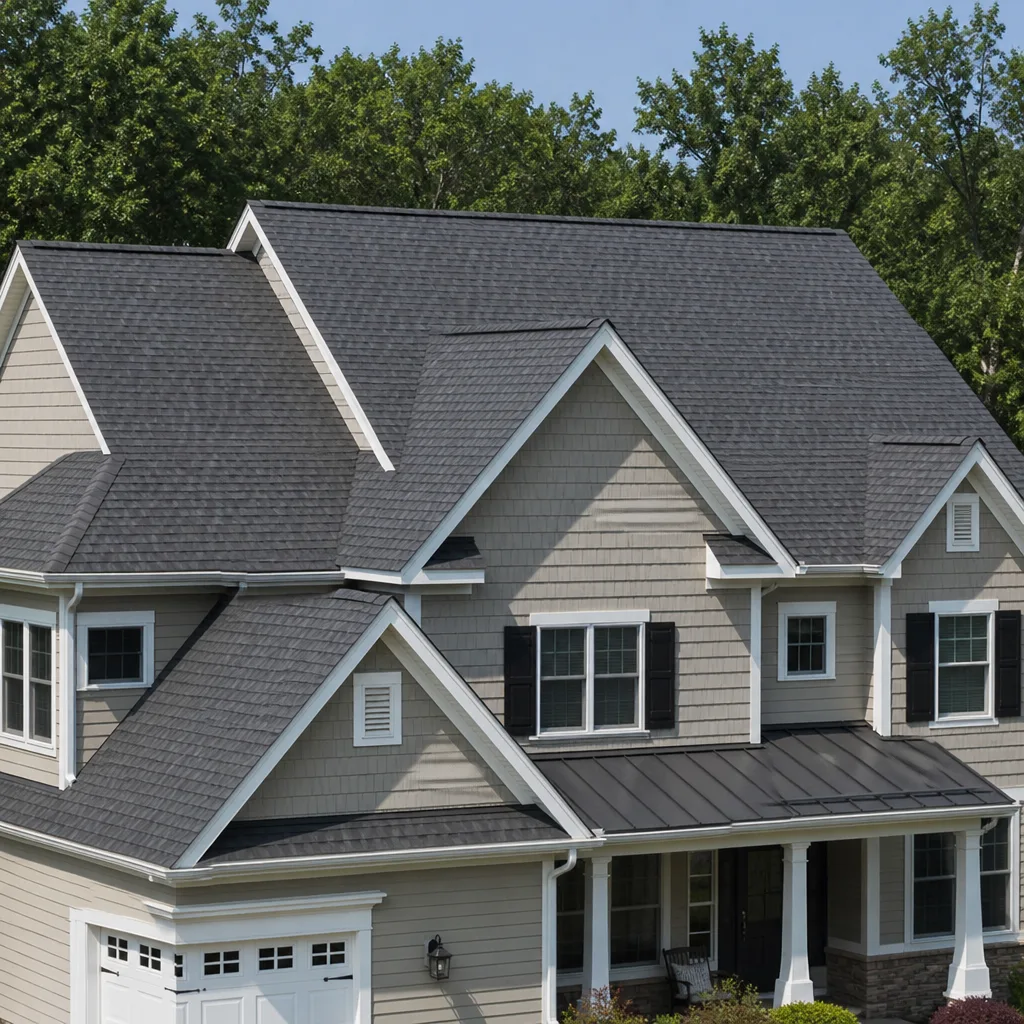 Architectural shingles
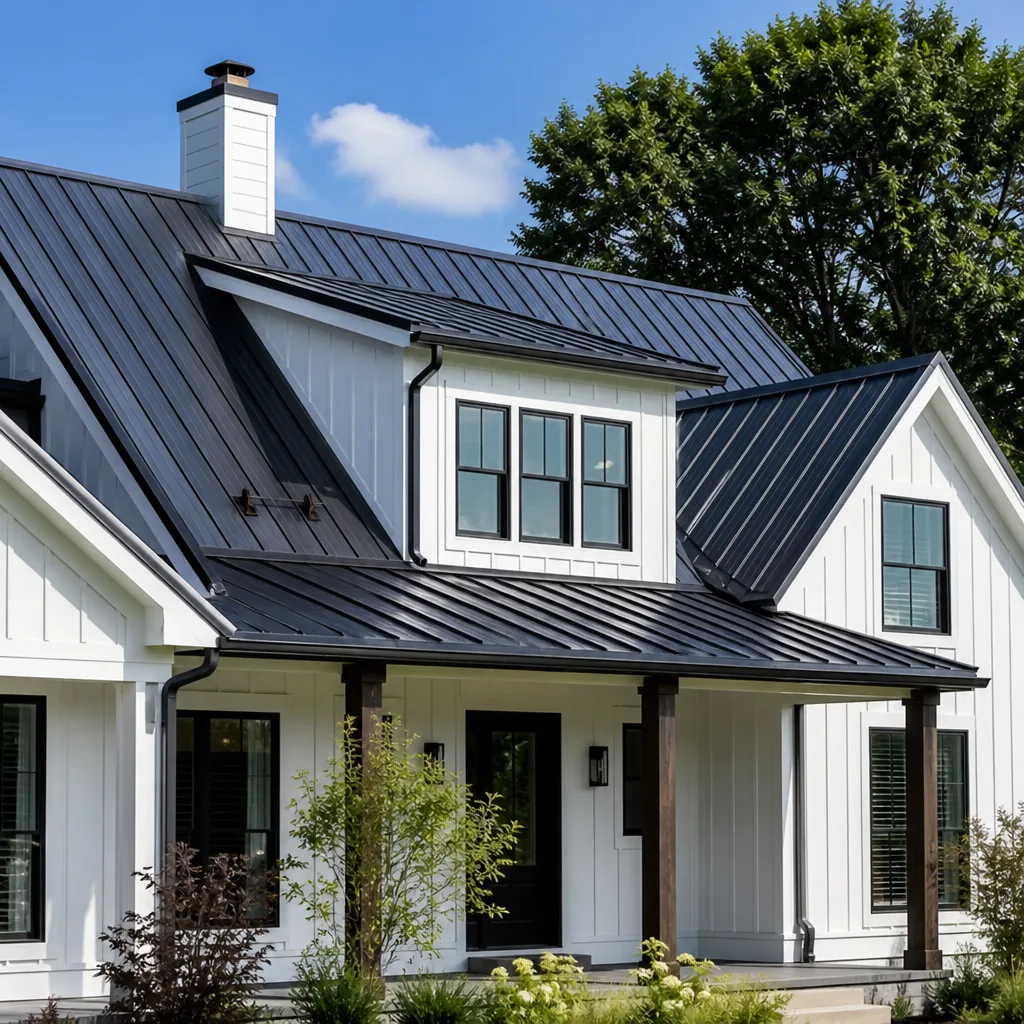 Metal roofing
 Tile roofing
 GAF
 Owens Corning
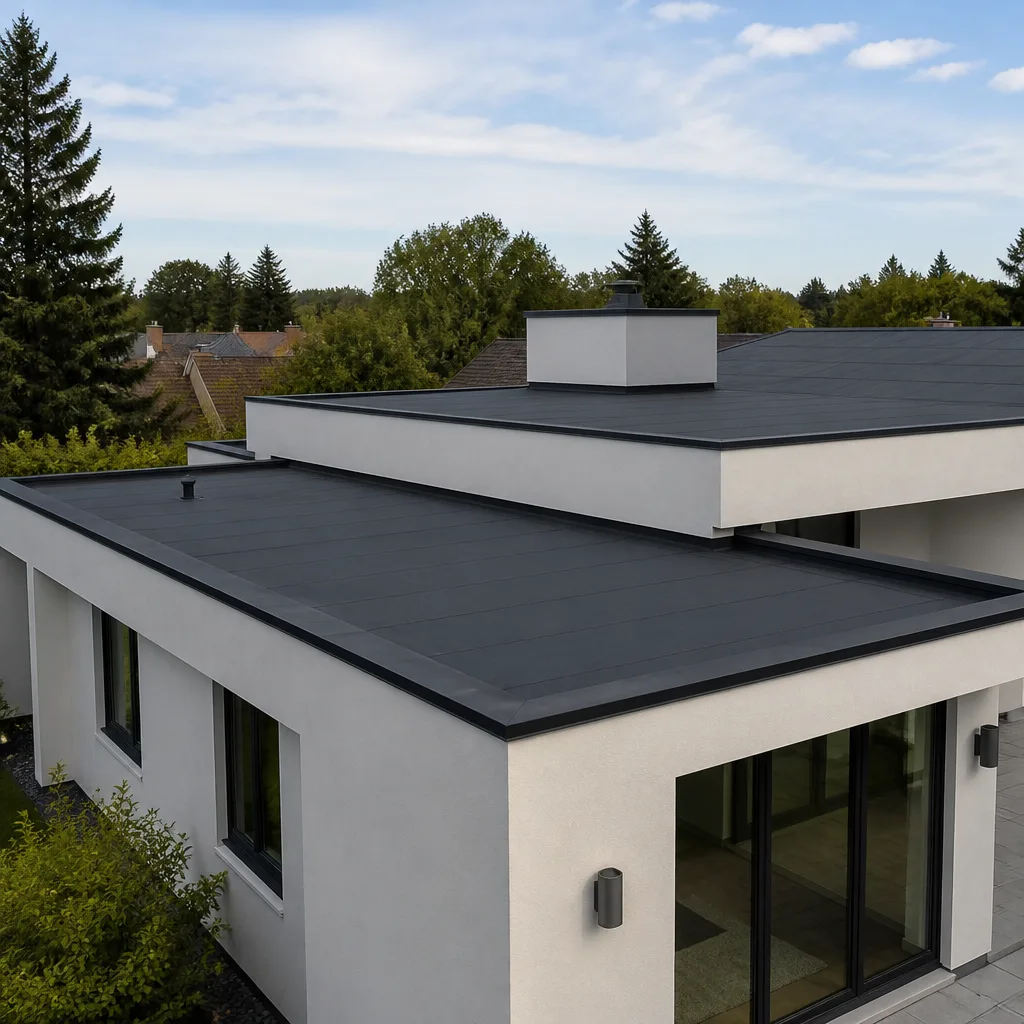 Flat & low-slope
Free roof inspection with deck photos before we talk money - GAF and Owens Corning certified installation
Roof Repair Maintenance Checklist for Van Nuys Homeowners
A roof that looks fine in November after months of dry heat can fail catastrophically on the first hard rain of December, not because it aged out but because thermal expansion cracked flashing seals that nobody checked. Van Nuys doesn’t have four seasons that stress a roof. It has two: a brutal heat stretch from May through October where surfaces hit 150 degrees and bake, then a compressed but intense winter rain window where atmospheric rivers can overwhelm systems designed for “low rainfall” assumptions. Most maintenance checklists are written for places with snow and frost heave. This one is built for the San Fernando Valley, where UV degradation, thermal cycling, and sudden deluges create failure patterns you won’t find in a generic guide. We’ll walk through what actually breaks on Van Nuys roofs, when to look, what you can document yourself, and what genuinely requires a contractor.
Quick Answer
A roof maintenance checklist for Van Nuys homeowners should focus on two stress cycles: heat damage from May through October (check flashing, sealant, granule condition, and ponding) and rain preparedness from November through April (check gutters, downspouts, valley seals, and low-slope drainage). Inspect your roof twice a year at minimum, document what you see with photos, and call a professional for anything involving active leaks, loose flashing, cracked sealant on penetrations, or work that requires ladder access on anything steeper than a low-slope roof. The goal is catching thermal expansion damage before the first hard rain of December turns it into a ceiling stain.
Styles & brands we work with
Table of Contents
- Van Nuys Has Two Roof Seasons, Not Four
- Flashing and Sealant: What Fails First in Valley Heat
- Granule Loss: UV Degradation vs. Normal Wear
- Gutter and Downspout Load Math for Atmospheric Rivers
- Flat and Low-Slope Roof Ponding on 1960s – 1980s Homes
- What You Can Document vs. What Requires a Licensed Contractor
- Twice-Yearly Inspection Checklist
Van Nuys Has Two Roof Seasons, Not Four
Van Nuys sits in USDA Hardiness Zone 10a, but that label undersells what actually happens on a rooftop here. From May through October, daytime highs regularly exceed 90 degrees, roof surfaces absorb direct sun for 12-plus hours, and nighttime temperatures drop 30 degrees or more. That daily expansion and contraction cycle is the single most destructive force on a Van Nuys roof. Metal flashing expands and contracts at a different rate than shingle or tile. Sealant that was flexible in June is brittle by late August. The materials don’t fail because they’re old. They fail because the junction points get worked loose by physics.
Then comes November. The Valley’s rain pattern is compressed and erratic. Some years bring twelve inches total spread across a dozen small storms. Other years deliver a single atmospheric river event that drops two inches per hour for a stretch, overwhelming drainage systems sized for drought assumptions. A roof that shed water fine during the dry years has never actually been tested at peak load. When the first hard rain of December hits, every hairline crack and loose seal becomes a water path. The houses most at risk in Van Nuys are the ones where nobody touched the roof during the dry season because everything “looked fine.”
The maintenance cycle for this climate is simple. Do your major roof work in late spring, before the heat peaks, or in October, after the worst of it breaks. Do your inspection in early November, before the first heavy rain arrives. Most checklists copied from Midwest templates tell you to clean gutters in fall and check ice dams in winter. Neither applies here. What applies is watching heat-related material degradation all summer and then pressure-testing it as soon as rain becomes a real possibility. If you only do one inspection per year, make it the first two weeks of November.
Flashing and Sealant: What Fails First in Valley Heat
In our experience at Van Nuys Roofing Co, we see the same failure sequence repeat on hundreds of roofs across the Valley every year. The first thing that goes is not the shingle. It’s the transition points. Flashing around plumbing vents, skylights, chimneys, attic vents, and the seams where roof planes meet walls. These are the places where two different materials meet, and they expand at different rates when the sun hits them.
The specific points that fail first after prolonged dry-heat exposure are:
- Pipe boot collars: The rubber gasket around plumbing vent pipes dries out and cracks. Once cracked, water follows the pipe straight down into the ceiling. These often fail in year 8 to 12, regardless of the shingle’s rated lifespan.
- Skylight curb seals: Skylight flashing kits rely on sealant joints at the corners. Heat makes the sealant lose adhesion from the metal and glass. By late summer, these joints are often pulling away enough to let water in during the first rain.
- Chimney counter-flashing: The step flashing under the counter-flashing is fine, but the sealant bead along the top edge cracks. Water runs down the chimney face, behind the counter-flashing, and into the roof deck.
- Wall step flashing: Where a shingle roof meets a stucco wall, the step flashing tucks under the building paper. Over time, stucco movement and thermal cycling break the sealant at the top of each step. The first heavy rain finds these gaps.
- Valley metal seams: On open valley roofs, the metal expands and contracts lengthwise. End laps that seemed tight after installation can open up a quarter inch after a few hot summers.
These are all points where a $20 tube of sealant applied in October prevents a $900 leak repair in December. But here’s the thing most homeowners don’t know: re-sealing over old cracked sealant usually fails within a year. The surface needs to be clean, dry, and often re-primed for the new sealant to bond properly. We see homeowners “fix” the same sealant joint three years in a row because nobody addressed the underlying adhesion problem. The right fix is removing the old material and starting fresh, which often requires flat bar work and a steady hand on a ladder. If you’re uncomfortable on a roof, this is a call to a professional.
Granule Loss: UV Degradation vs. Normal Wear
Every asphalt shingle loses granules over time. The question is whether the loss pattern indicates normal aging or accelerated UV degradation, and the distinction matters for warranty claims. Most manufacturer warranties cover premature granule loss if the shingle was defective, but they’ll deny the claim if the loss is from weather exposure. The documentation you keep makes the difference.
Normal granule loss accumulates from foot traffic, minor impact, and gradual weathering. It shows up as slight color variation across the shingle surface, consistent wear on all slopes, and granules collecting in gutters in small amounts each year. This is expected and rarely indicates a defect.
UV degradation in Van Nuys presents differently. The south and west-facing slopes, which take full afternoon sun, show significantly more granule loss than north-facing slopes on the same roof after the same number of years. The asphalt itself appears dry, cracked, or “alligatored” because the UV has broken down the oils in the mat. Granule piles in gutters appear in higher concentration beneath those hot slopes. Shingles may also show rusting or denting at nail heads as the sealant strip loses adhesion and the shingle flexes.
Why this matters for your maintenance checklist: if you’re within your shingle’s warranty window and you’re seeing accelerated granule loss on the sun-exposed slopes, you want a documented inspection before the problem gets worse. A roofer’s report noting the pattern, dated photos, and a sample of the shingle can support a warranty claim. If you wait until the shingle has lost 50 percent of its granules, the manufacturer may argue you allowed the roof to fail through neglect. Documentation is a maintenance action in itself.
One more thing worth knowing. Granule loss accelerates after a roof has been power-washed, which is a common “maintenance” service sold by contractors who don’t understand asphalt shingles. Never allow power washing on an asphalt shingle roof. It strips granules, forces water under the shingle laps, and voids most manufacturer warranties. If someone offers to wash your roof, decline.
Gutter and Downspout Load Math for Atmospheric Rivers
Van Nuys is classified as a semi-arid climate. But the storms that do arrive are often concentrated, high-intensity events rather than long gentle soakers. When a winter atmospheric river sets up over the San Fernando Valley, rainfall rates of one to two inches per hour are not rare. Your gutter system doesn’t care what the annual average is. It cares about the peak minute.
Here’s the math. A 1,500-square-foot house with a simple gable roof has roughly 1,800 square feet of roof surface. At two inches of rain per hour, that roof sheds about 37 gallons of water per minute. A standard five-inch K-style gutter can carry about that much on a clean, properly sloped run. But add a debris load, a sagging section, or a downspout that’s partially blocked, and the system backs up. Water spills over the gutter lip, saturates the fascia board, and runs down the wall into window flashing and siding joints.
For Van Nuys homeowners, the gutter checklist is specific:
- Clean twice a year at minimum: Once in late October before winter rains, once in April after the rain season ends. If you have trees overhanging the roof, add a third check in December.
- Check the slope: Gutters should pitch 1/4 inch per 10 feet toward the downspout. Over time, hangers loosen and sections sag. Water pools in the low spots instead of draining.
- Verify downspout discharge: Downspouts should discharge at least 5 feet from the foundation. Most Van Nuys homes have downspouts that dump right at the stem wall, which is how you get slab moisture problems and foundation staining.
- Count the downspouts: A single downspout per gutter run is fine for a 20-foot run. For a 40-foot run, you need two. Many older Van Nuys homes were built with one downspout on runs that are now handling more water than designed because neighboring construction changes drainage patterns.
- Inspect the gutter seams and end caps: These are the first places to leak. A slow drip at a seam in December becomes a steady stream by February.
The cheapest insurance against gutter failure is a $200 handyman call in October. The most expensive version is a rotted fascia board, water-damaged eaves, and mold in the attic after one hard winter. If you’re not sure whether your gutter system is sized right for the loads it actually sees, a roof inspection can tell you quickly. We inspect drainage as part of every roof condition assessment, because it doesn’t matter how good the shingle is if the water has nowhere to go.
Flat and Low-Slope Roof Ponding on 1960s – 1980s Homes
A lot of Van Nuys housing stock was built between 1960 and 1985, and many of those homes have flat or low-slope roof sections over carports, additions, patios, and even entire floor plans. Low-slope roofs behave completely differently than the shingle roofs on the main house, and they fail on their own schedule. The most common problem isn’t leaks at the surface. It’s ponding.
Ponding is defined as standing water that remains on a roof surface 48 hours or more after rainfall. In Van Nuys, where rain events are short and hot sun follows, a roof that dries out in 24 hours is usually fine. But any section that holds water for two days or more is degrading. Standing water accelerates breakdown of the roof coating, promotes algae and biological growth, and adds weight stress to the deck. On older homes, repeated ponding is the precursor to structural sag.
The architectural styles most affected are the mid-century ranch and the California contemporary with a flat roof over the garage. These roofs were often built with minimal slope, sometimes as low as 1/8 inch per foot. That works when the structure is new and the deck is perfectly straight. Thirty years later, the deck has settled, the insulation has compressed, and the drainage slope is now zero or negative. Water sits where it shouldn’t.
Homeowners can document ponding themselves. After a rain, photograph any standing water and mark the outline. Check again at the 48-hour mark. If water remains, you have a drainage-abatement issue. The fix options range from re-coating with a tapered insulation system that adds slope, to installing additional scuppers or drains, to correcting deck settlement. This is not a do-it-yourself repair. It requires understanding the roof assembly, the membrane type, and the load capacity of the structure. But the documentation part is absolutely a homeowner task, and it’s the difference between catching the problem early and discovering a sagging roof deck years later.
What You Can Document vs. What Requires a Licensed Contractor
California law is clear about the boundary between homeowner maintenance and work that requires a licensed contractor. The general rule: a homeowner can perform maintenance and minor repairs on their own property without a license, but any work that requires a building permit must be done by a licensed contractor. For roofing, that means patching a small section of shingles or re-caulking a vent pipe is technically permissible. Replacing a roof, re-sloping a deck, or any structural work requires a permit and a licensed roofer.
But practical safety matters as much as the legal line. Here’s the honest breakdown:
- Homeowner-documentable tasks: Visual inspection from the ground with binoculars, photographing gutters and downspouts, checking for water stains in the attic after rain, documenting granule accumulation in gutters, marking ponding areas, checking for loose or missing shingles from a ladder at the eave, and keeping a maintenance log with dated photos. All of this is safe, legal, and valuable documentation.
- Homeowner-doable repairs (with caution): Replacing a single missing shingle at a reachable location, re-sealing a small crack at a pipe boot, cleaning gutters from a stable ladder, and clearing downspout blockages. These are light maintenance tasks. Use appropriate ladder safety, work with a partner, and don’t work on the roof when it’s hot and the surface is soft.
- Contractor-required work: Any roof repair involving the structural deck, any replacement of flashing at penetrations or walls, any work on a roof slope steeper than 6:12, any repair that requires removing more than a small patch of shingles, any work on a low-slope roofing membrane, and anything involving roof-mounted equipment like solar panels or HVAC units. Getting this wrong leaks into the house, void the manufacturer warranty, and creates liability if there’s an insurance claim.
California insurance carriers have also gotten stricter about documentation. If you file a water-damage claim and the adjuster finds that the leak came from a flashing area that should have been maintained, the claim can be denied. If you made repairs yourself and those repairs are determined to be improper, the denial gets even easier. A professional inspection report, even one done annually at a couple hundred dollars, creates a paper trail that shows you maintained the roof responsibly. That’s money well spent.
Twice-Yearly Inspection Checklist
Here’s the actual checklist, built around Van Nuys’s two stress cycles. Do the full inspection in early November, before the winter rain window. Do a lighter version in April, after the rains end and before the heat builds.
November (Rain Preparedness) – Full Inspection:
- Clean all gutters and downspouts. Flush downspouts with a hose to verify clear drainage.
- Inspect all flashing points: pipe boots, skylights, chimney, wall step flashing, valley metal. Look for cracked sealant, lifted metal, visible gaps.
- Check for missing, cracked, or lifted shingles on all slopes. Pay extra attention to south and west-facing slopes where thermal movement is highest.
- Look for granule accumulation in gutters. Note which downspout carries most of it; this indicates which slope is shedding.
- Inspect the attic after a rain. Look for water stains on rafters, decking, and insulation. Mark any damp spots with a marker and monitor them.
- Check flat and low-slope roof areas for ponding. Photograph any standing water after the next rain.
- Verify all downspouts discharge at least 5 feet from the foundation. Extend if necessary.
- Document everything with dated photos and store them in a folder. This is your maintenance log.
April (Heat Preparedness) – Lighter Check:
- Re-check sealant on all penetrations. Summer heat is what cracks it, so catch early fissures before the hot stretch accelerates them.
- Look for shingle curling or lifting. Shingles that are already flexible in April will be failing by August.
- Clear any debris that accumulated over winter. Palm fronds, leaves, and seed pods trap moisture against the roof surface.
- Check gutters for granule loss from the winter. A sudden increase in granules after one season is a red flag.
- Inspect caulk and sealant around any roof penetrations that were exposed to winter wind and rain.
- Verify no new ponding areas developed after winter storms.
If you do these two checks every year, you’ll stay ahead of 90 percent of the roof failures we see in Van Nuys. The remaining 10 percent are weather events and material defects no checklist catches. But those are covered by insurance and warranty when your maintenance documentation is in order.
Common Mistakes to Avoid
- Skipping the November inspection because the roof “looked fine all summer.” Dry heat doesn’t show leaks. It creates the conditions that will leak once rain arrives. The roof that looks fine in October is exactly the roof you need to inspect.
- Re-caulking over old sealant without removing it. New sealant needs clean, prepared surface to bond. Applying over cracked material is a temporary fix that typically fails in six to twelve months.
- Power-washing an asphalt shingle roof. This strips protective granules, ends shingle life years early, and voids most manufacturer warranties. It’s one of the most destructive “maintenance” services sold.
- Ignoring granule loss patterns. If one slope is shedding granules faster than the others, that’s accelerated UV degradation. Document it while the shingles are still under warranty. Waiting voids the claim.
- Neglecting gutter slope. A gutter that fills with water but doesn’t drain is worse than a clogged gutter. Standing water in gutters corrodes the metal, adds weight to the fascia, and overflows directly onto the wall.
- Treating flat roofs like the shingle roof. Low-slope systems need different maintenance, different inspection points, and different repair materials. Shingle repair products don’t belong on a membrane roof.
- Calling a contractor only when water is actively dripping. By then, the damage is done. The repair costs more, the insurance claim is harder, and the interior damage adds to the total. Consistent inspection costs less than emergency repair.
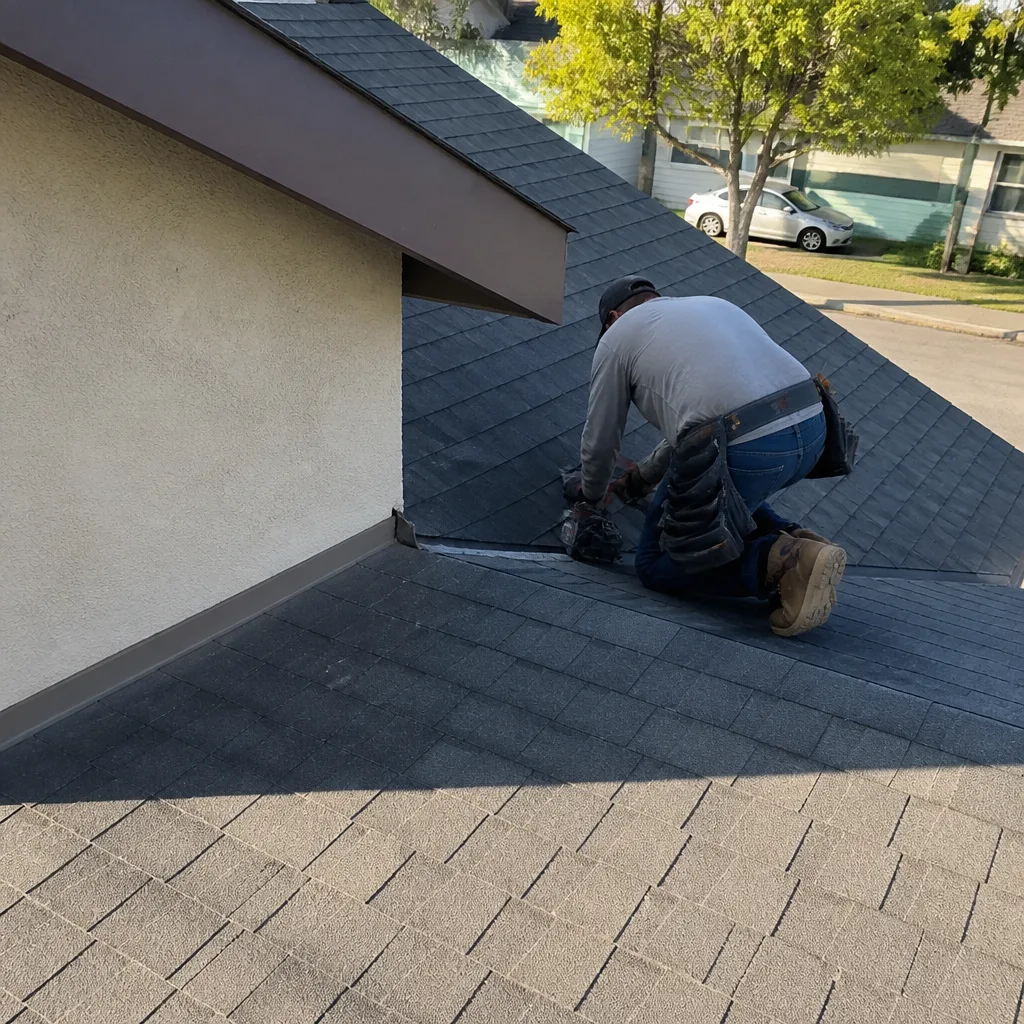
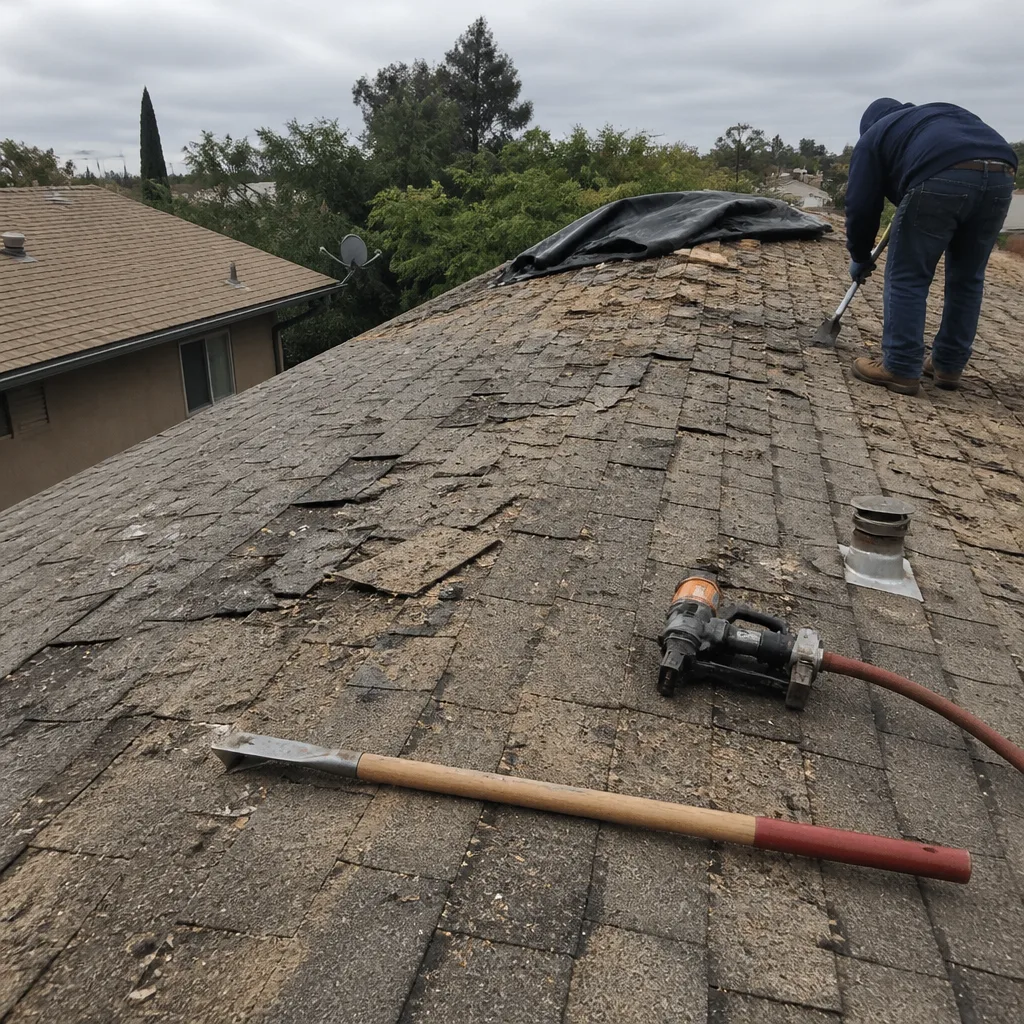
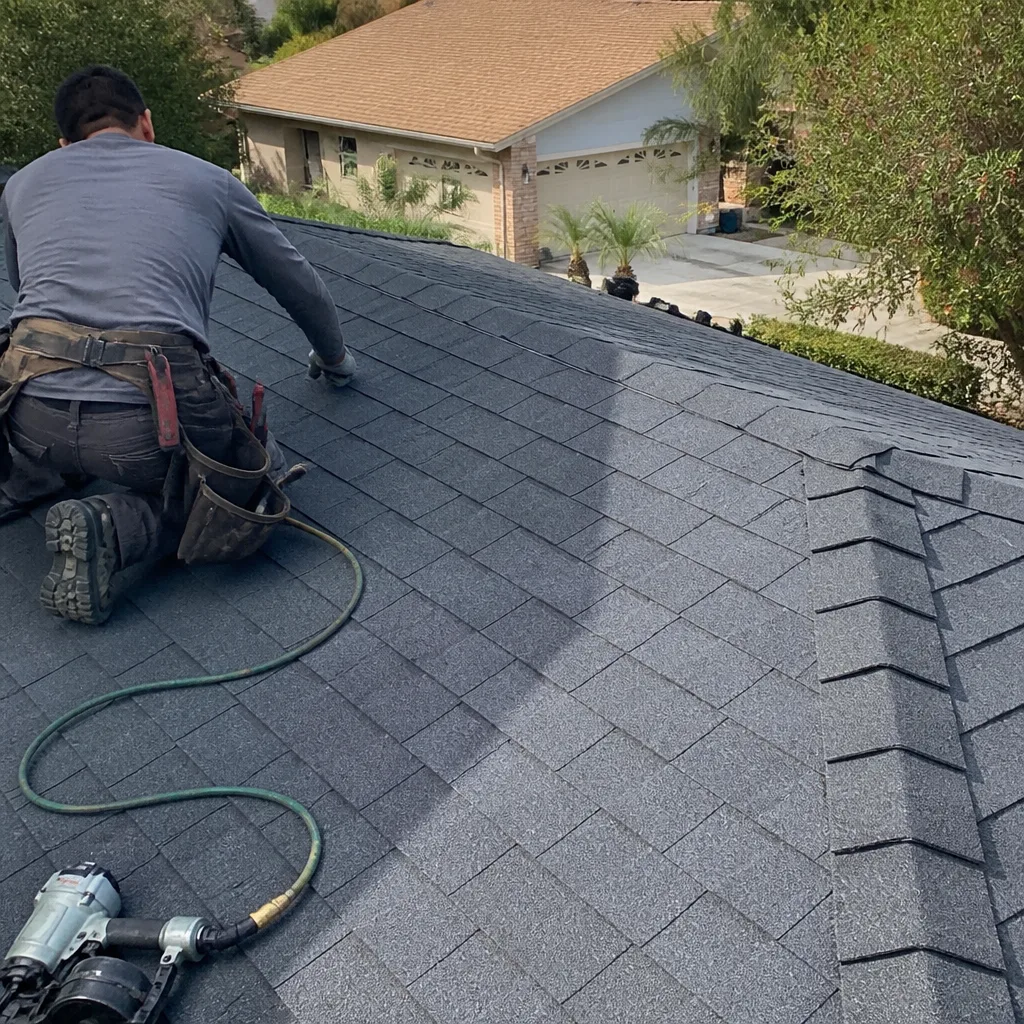
See the difference
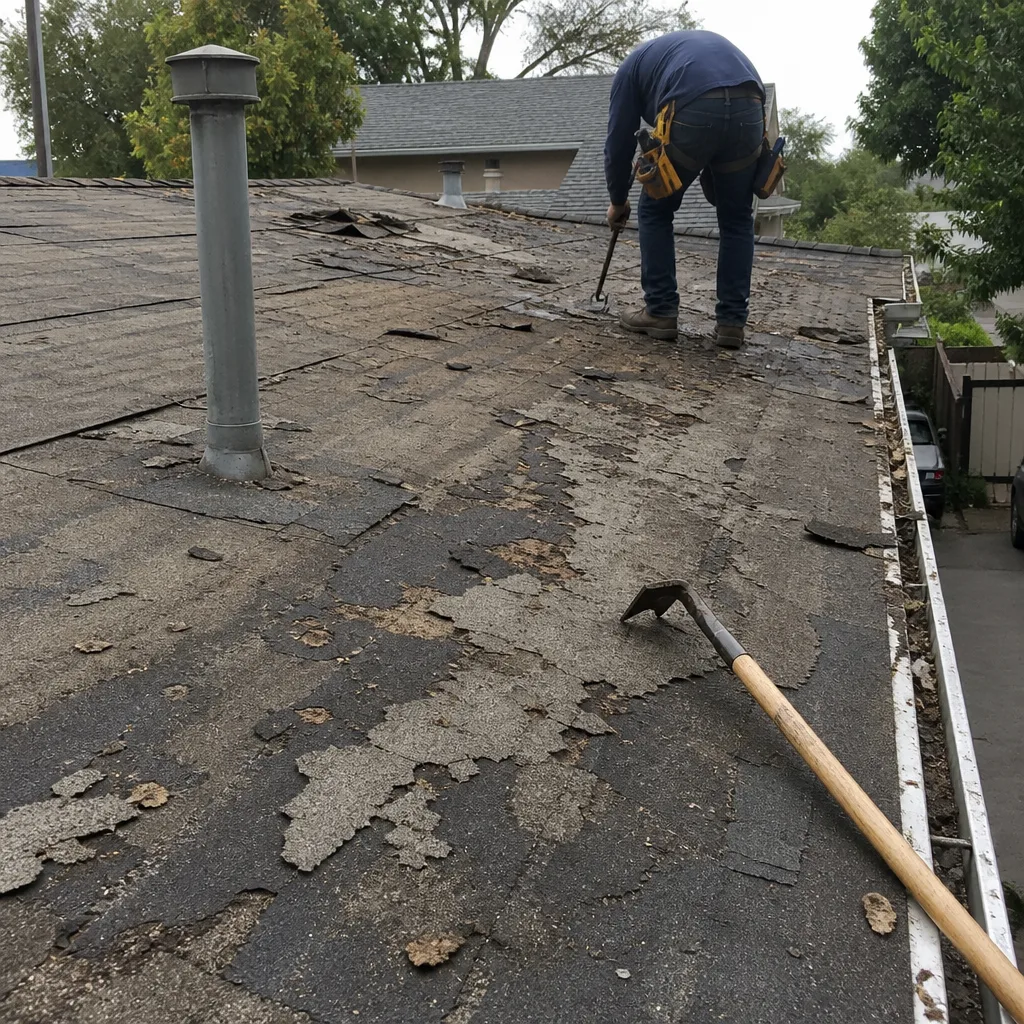 Before
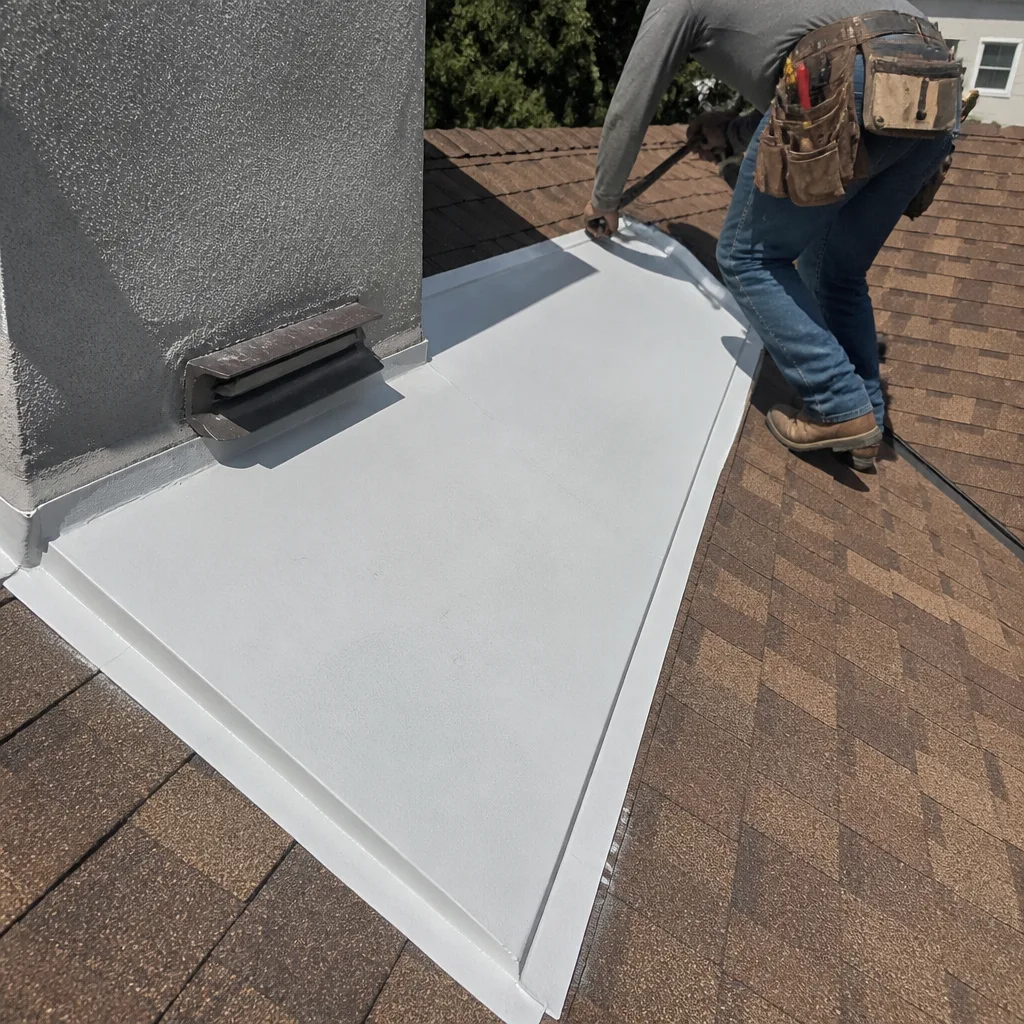 After
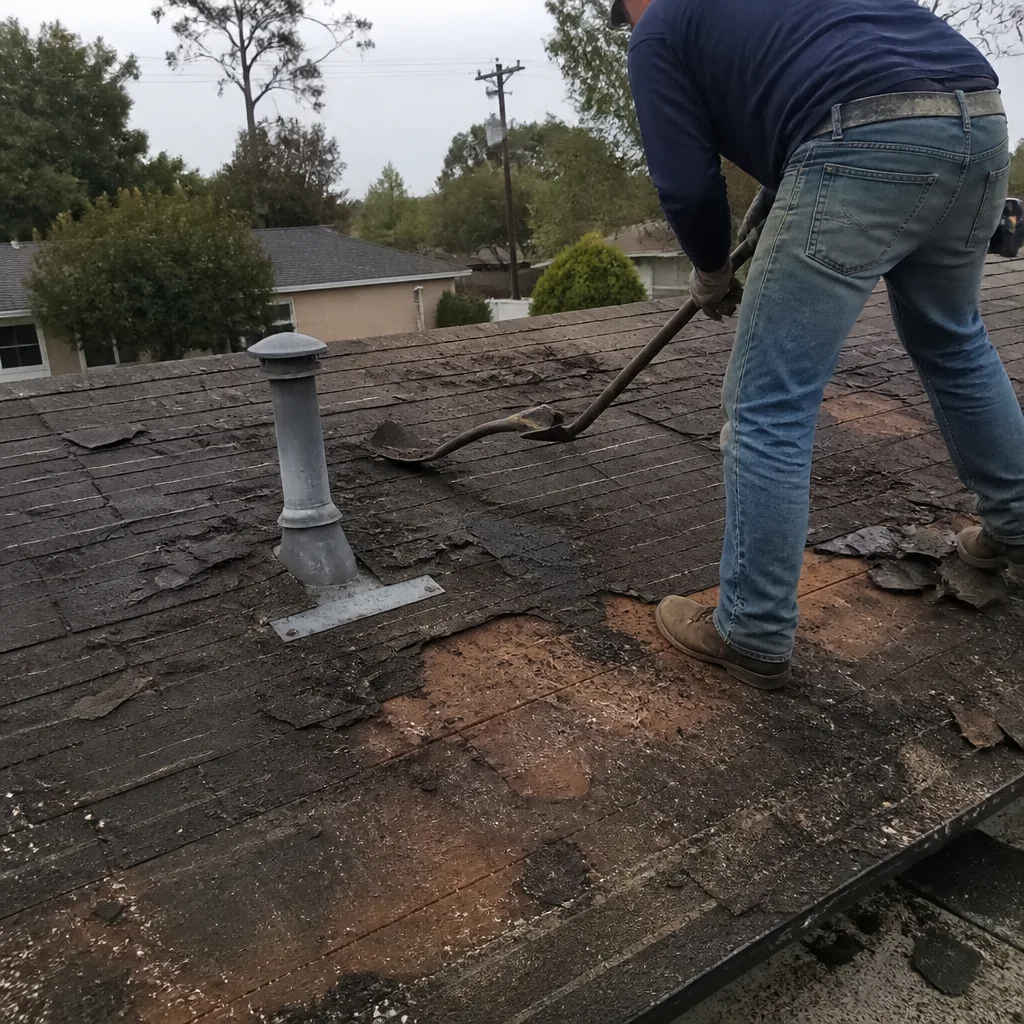 Before
 After
 Before
 After
When to Call a Professional
Call a licensed roofer when you see active leaking, water stains spreading in the attic, lifted or missing flashing, cracked sealant at multiple penetration points, sagging in a flat roof deck, or granule loss concentrated on one slope. Call when your home has any roof condition you don’t feel comfortable assessing from a ladder. The roof inspection in Van Nuys we do is available as a standalone service, so you can get an honest condition assessment without committing to any repair or replacement spend. We inspect first and recommend second. If repair makes sense, we’ll tell you. If replacement is the honest answer, we’ll tell you that too, and walk you through material choices across the major brands we work with, including GAF, CertainTeed, Owens Corning, and IKO. For roof repair in Van Nuys or a full roof replacement in Van Nuys, Van Nuys Roofing Co offers free estimates. Call (866) 321-6172 to schedule yours.
Frequently Asked Questions
How often should I inspect my roof in Van Nuys?
Inspect your roof twice a year: a full inspection in early November before winter rains, and a lighter check in April after the rain season ends. Between those two, you’ll catch most heat-related damage and be prepared for whatever the winter delivers. If your home is over 20 years old, add a quick visual check from the ground in August, when thermal expansion is at its peak and sealant cracks are easiest to spot.
How much does roof repair cost in Van Nuys?
Roof repair in Van Nuys typically ranges from $350 for a small flashing repair or shingle replacement to $2,500 or more for valley replacement, skylight re-flashing, or membrane repair on a low-slope roof. The wide range reflects the variability of roof types, accessibility, and the extent of hidden damage. For an exact quote on your roof, call (866) 321-6172. Estimates are free.
Will the price change once work starts?
It can, but only if we find hidden damage beneath the surface that wasn’t visible during the initial assessment. Any reputable roofer will tell you that a small leak can mean larger water damage under the shingles. Our approach is to quote what we can see and walk you through anything we find once materials are removed, before additional work proceeds. You’ll approve any change before we move forward.
Do you pull permits for roof work in Van Nuys?
Yes. In the City of Los Angeles, which includes Van Nuys, most roof repairs and all roof replacements require permits. We handle the permitting process as part of the job. Work done without permits can create problems when you sell the home and may affect your insurance coverage. A licensed contractor will pull the permits, pass the inspections, and leave you with the documentation.
How long will a roof repair take?
Most roof repairs take one day once materials are on site. Larger repairs, like valley replacement or re-flashing around a skylight, may take two days. Full replacements run longer, depending on the size and complexity of the roof. We’ll give you a clear timeline before work starts so you know what to expect.
What’s the difference between roof repair and maintenance?
Maintenance is preventive: cleaning gutters, inspecting flashing, documenting granule loss, and catching small issues before they become failures. Repair is corrective: fixing a leak, replacing damaged shingles, or addressing a structural problem. Van Nuys Roofing Co home services include both, and our inspection service is where most maintenance-minded homeowners start. A regular inspection schedule often means replacing a few shingles instead of a whole roof.
The Bottom Line
A Van Nuys roof fails from heat long before the rain shows you the evidence. The maintenance that matters here is checking flashing, sealant, granules, and drainage on a schedule that matches the Valley’s actual weather pattern: a full inspection before winter rains, a lighter check after the rains end, and an eye on the roof during the hottest months. Document what you see. Repair what’s repairable before it becomes a leak. Call a professional when the work involves flashing, structural decking, low-slope membranes, or anything beyond your comfort level. Most of the expensive roof failures we see in Van Nuys were preventable at a fraction of the cost, a year earlier.
Written by the team at Van Nuys Roofing Co, serving Van Nuys since 2015. Explore more guides & resources from our experts.