Last updated October 31, 2026
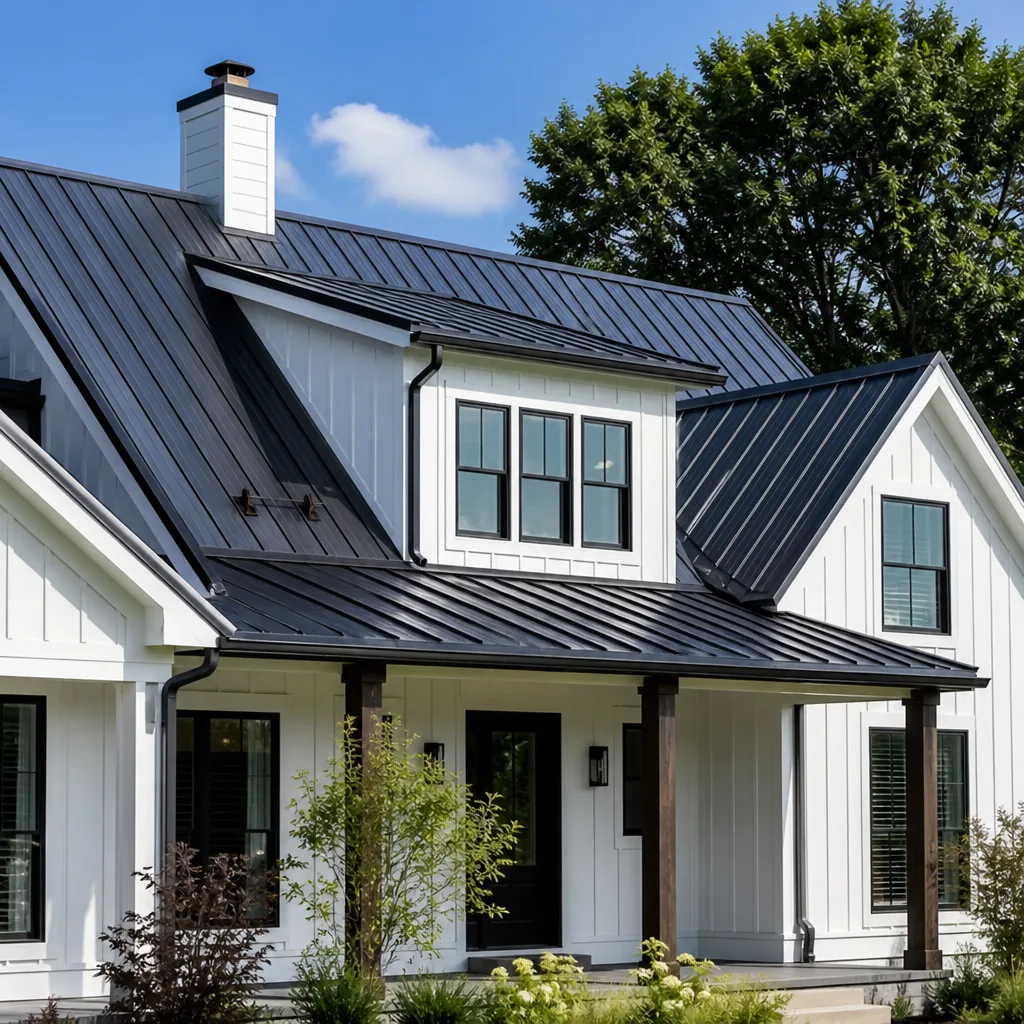 Metal roofing
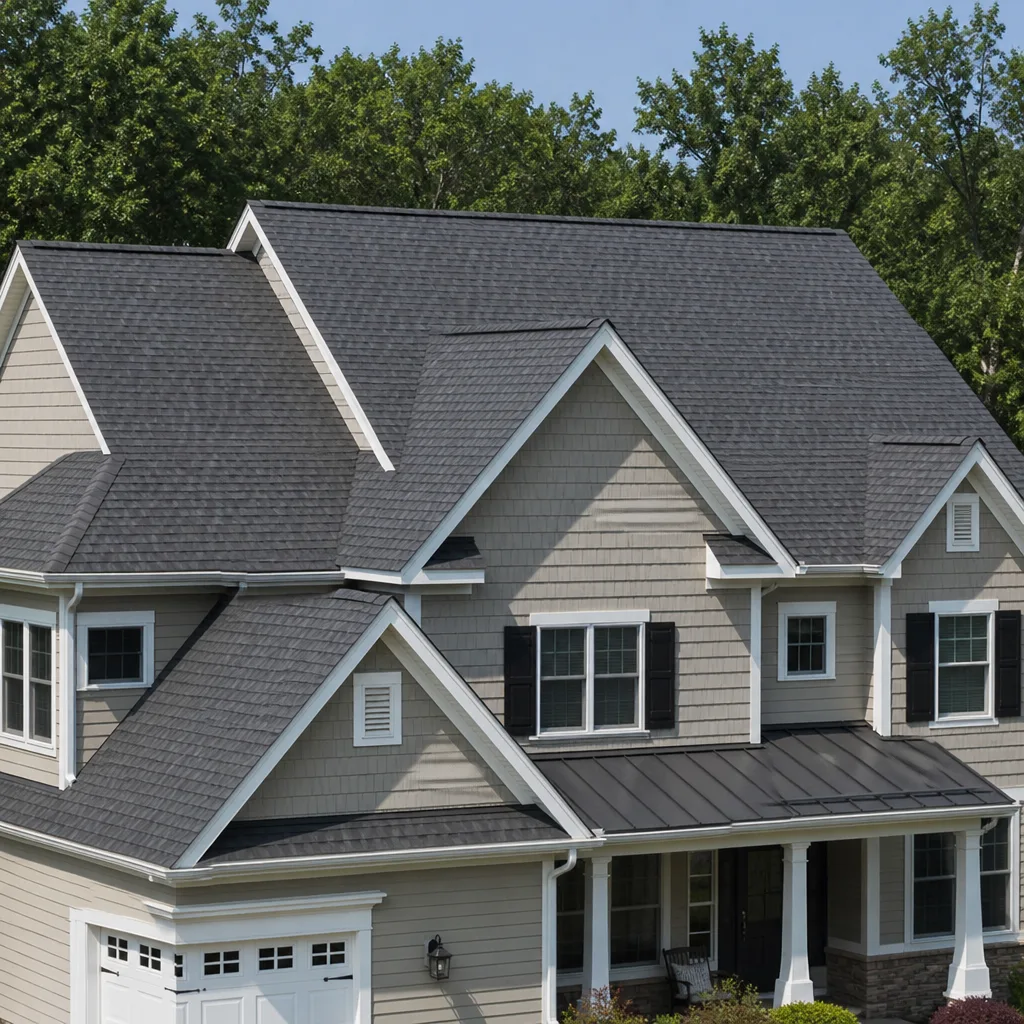 Architectural shingles
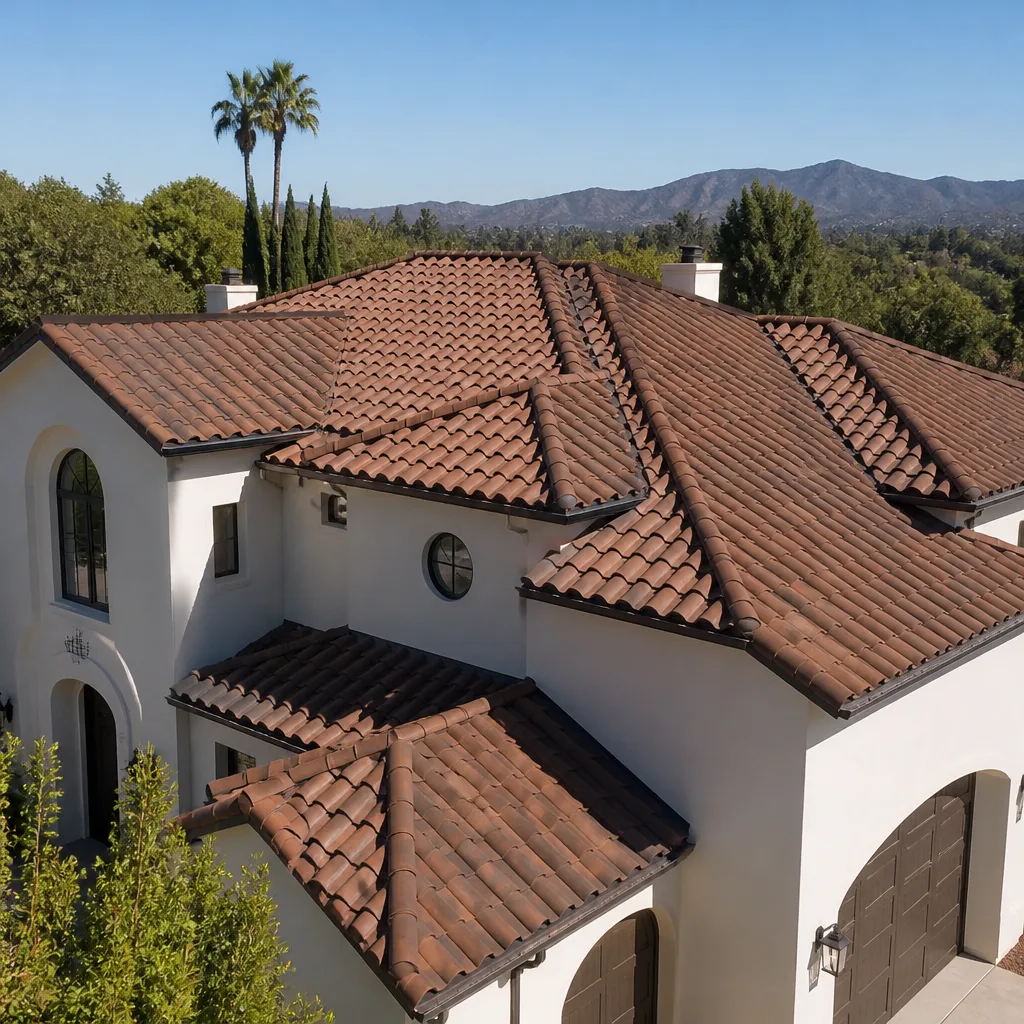 Tile roofing
 GAF
 Owens Corning
 Flat & low-slope
Free roof inspection with deck photos before we talk money - GAF and Owens Corning certified installation
The Complete Guide to Roofing in Van Nuys
Most roofing guides written for Los Angeles are useless in Van Nuys. The San Fernando Valley regularly hits 10 to 15 degrees hotter than coastal neighborhoods like Santa Monica or Venice, and that changes which materials hold up, how quickly adhesives break down, and whether a manufacturer’s “Southern California” rating means anything at all. This guide is written from the perspective of a crew that works on Van Nuys roofs every week, and you can find more guides & resources on our blog. We’ll cover what actually fails here, which materials make sense given the Valley’s heat and wind, what LA County permitting requires for Van Nuys addresses, and how to think about repair versus replacement when the deck is baked by a hundred and ten degree days every August.
Quick Answer
Roofing in Van Nuys means choosing materials that can survive sustained heat above 100°F, Santa Ana wind gusts over 50 mph, and occasional ember exposure from wildfire zones in the surrounding hills and canyons. The most reliable approach is to start with a professional roof inspection to see what’s actually failing, then choose a material based on heat performance, fire rating, and the condition of the existing structure, not on what a single manufacturer happens to sell. For help deciding whether to tackle issues yourself or call in experts, see DIY vs Professional Roofing: The Van Nuys Homeowner’s Decision Guide. Repairs make sense for localized damage on roofs with more than five years of life left; replacement makes sense when the deck is compromised or the surface is failing in multiple areas at once.
Styles & brands we work with
Table of Contents
- How Van Nuys Weather Actually Affects Your Roof
- Choosing the Right Roofing Material for the Valley
- Heat, UV, and the Real Lifespan of Shingles in Van Nuys
- Wildfire Ember Exposure and What Fire Ratings Miss
- Why Van Nuys Housing Stock Changes the Roofing Equation
- Van Nuys Permitting, Codes, and the City of Los Angeles
- Repair vs. Replacement: How to Decide in Van Nuys
- Common Mistakes to Avoid
How Van Nuys Weather Actually Affects Your Roof
Van Nuys sits in the middle of the San Fernando Valley, which acts like a bowl that traps hot air. During peak summer, afternoon temperatures at rooftops regularly exceed 130°F because the roofing surface absorbs solar radiation all day. That’s not an estimate; it’s what an infrared thermometer reads on a shingle in July. At night, temperatures drop by 30 to 40 degrees, so the roof expands during the day and contracts at night. Over a decade, that thermal cycling works nails loose, cracks sealant, and causes shingles to lose granules faster than they would in a coastal climate.
The thermal inversion layer that sits over the Valley in summer also traps smog and particulate matter. That airborne grit settles on roofs and accelerates surface wear. Combined with UV exposure that ranks near the top of all Los Angeles neighborhoods, Van Nuys roofing has to handle heat, pollution, and solar radiation in a way that a guide written for, say, Pasadena or Long Beach won’t anticipate. We see roofs in Van Nuys that look ten years older than the same product installed in West LA, simply because the microclimate is that much harder on materials.
Choosing the Right Roofing Material for the Valley
Material choice in Van Nuys isn’t about what looks nice in a brochure. It’s about how the product behaves at 115 degrees outside and 140 degrees at the surface. We work with seven leading manufacturers: GAF, CertainTeed, Owens Corning, IKO, Atlas, Tamko, and Boral. That’s not a brag, it’s a practical advantage. We can tell you honestly that a Boral tile roof handles the Valley differently than an Atlas shingle, and that the right answer depends on your home’s structure and your budget.
Here’s what we’ve observed across hundreds of Van Nuys jobs.
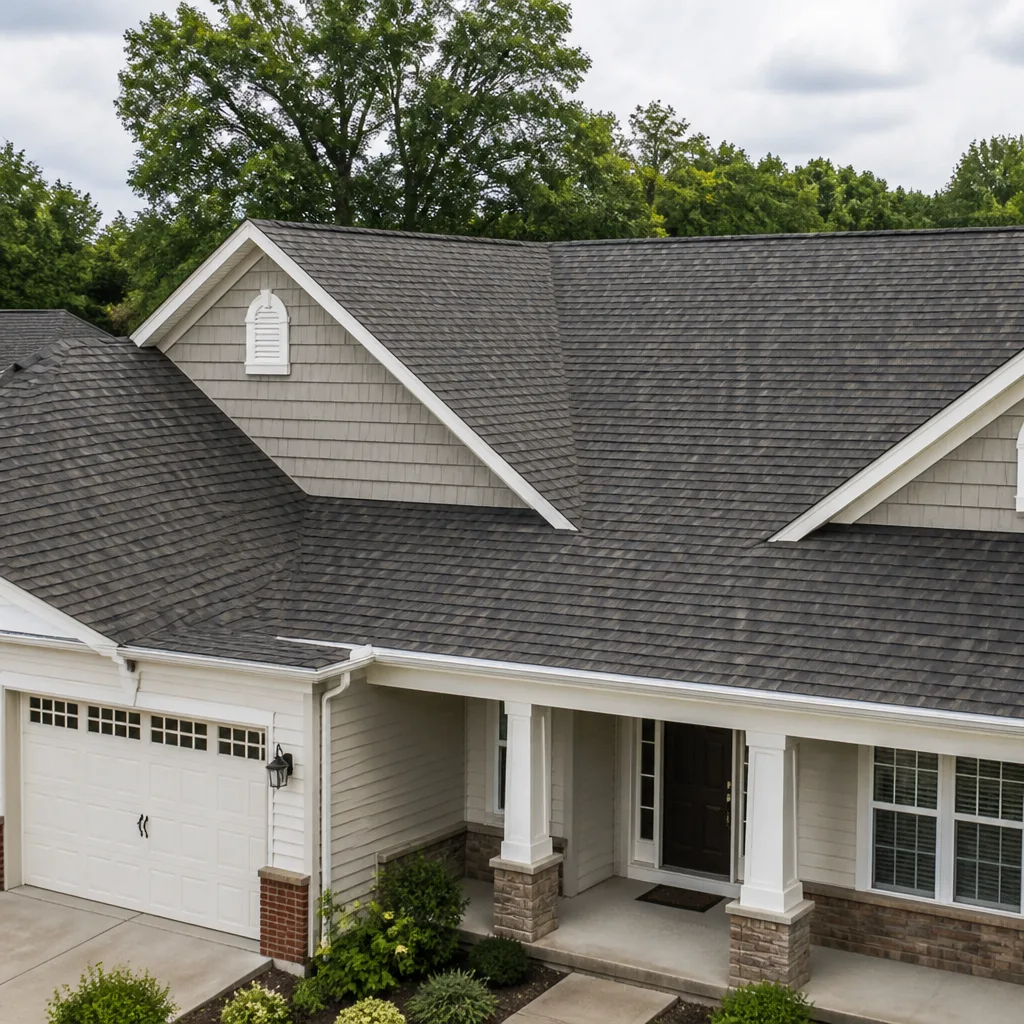
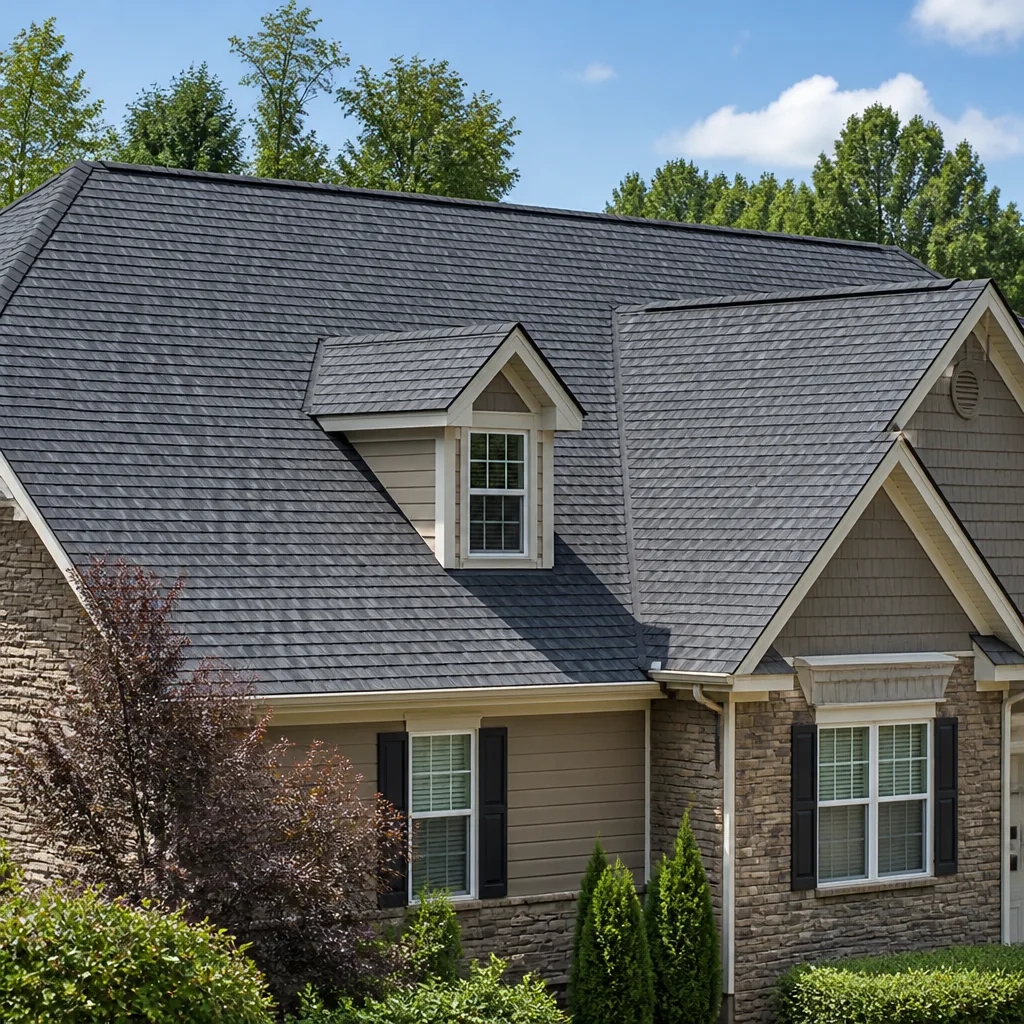
- Asphalt shingles: The most common choice in Van Nuys, and a solid one, but not all grades are equal. Entry-level three-tab shingles degrade fast under Valley heat and UV. Architectural shingles from GAF, CertainTeed, or Owens Corning hold up better because the dimensional tabs create less surface tension and the asphalt blends are formulated for higher heat. Expect real-world lifespan in Van Nuys to run about twenty percent shorter than the manufacturer’s warranty term.
- Concrete and clay tile: Excellent for heat, unmatched for longevity, and a strong choice for the Spanish and ranch homes that dominate Van Nuys’s older neighborhoods. But tile is heavy. If the home was built in the 1950s or 1960s, the original framing may not have been designed for tile, and a structural assessment is required before installation. Boral makes several tile profiles that weigh less than traditional clay, which opens tile up to more homes than you’d think.
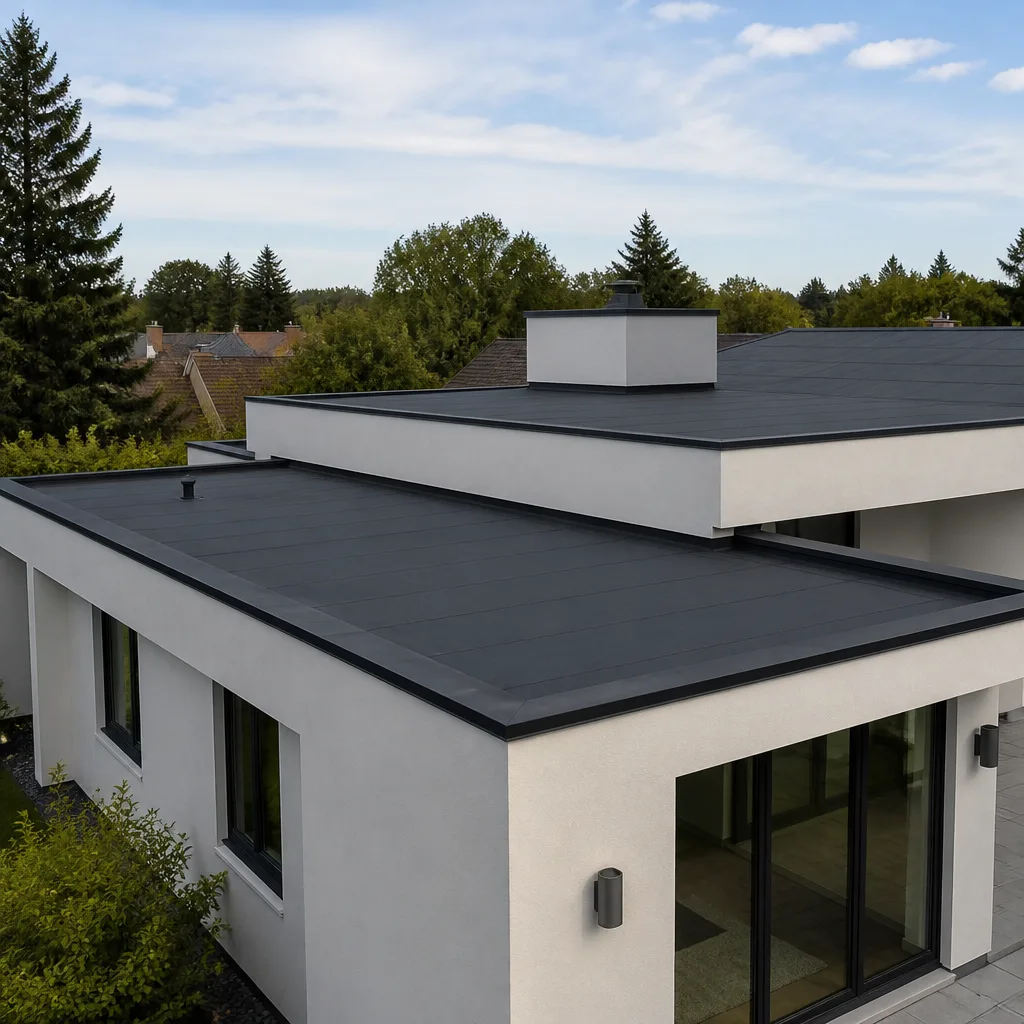
- Flat roof systems: Many Van Nuys homes built between 1955 and 1975 have low-slope or flat sections. Modified bitumen, TPO, and built-up roofs all perform here if installed correctly. Heat is the primary enemy; improper torch-down work can fail in five years in the Valley when the same installation might last fifteen in a cooler climate.
The point: your roof, your material choice. We stock and install across multiple brands, so the recommendation you get from us is based on the roof’s actual conditions and your goals, not on which manufacturer gives us the best incentive this quarter.
Heat, UV, and the Real Lifespan of Shingles in Van Nuys
Manufacturers publish warranty periods like “lifetime” or “50 years,” but those assume installation in a temperate test environment. The Valley doesn’t play by those rules. In Van Nuys specifically, UV exposure at the roof line is intense year-round, and the sustained heat of July through September softens the asphalt in shingles, causing them to bond differently to the fiberglass mat. The result is granule loss, curling, and cracking that shows up five to ten years earlier than the manufacturer’s printed estimates.
- Thermal cycling stress: Daily expansion and contraction from 50°F mornings to 130°F surface temperatures loosens nails and breaks the seal strip between layers.
- UV degradation: The Valley sees more direct sun days per year than almost any urban area in California. UV breaks down the petroleum-based asphalt, causing shingles to become brittle and lose protective granules.
- Heat island effect: Van Nuys has miles of pavement and sprawling commercial roofs that absorb heat during the day and radiate it at night. Your roof doesn’t cool down as much after sunset as a coastal roof does, so the materials stay warm and flexible when they should be contracting and settling.
- Pollution and particulate adhesion: The inversion layer holds smog over the Valley. Ozone and nitrogen oxides attack roofing materials chemically, accelerating wear in ways that don’t show up in coastal zones.
What this means in practice: a shingle with a 30-year warranty should be evaluated for replacement around the 18 to 22 year mark in Van Nuys, depending on condition, ventilation, and exposure orientation. South-facing and west-facing slopes age fastest because they take the brunt of afternoon sun. A Roof Inspection in Van Nuys can tell you where your roof actually is in its lifespan, rather than where the manufacturer’s brochure says it should be.
Wildfire Ember Exposure and What Fire Ratings Miss
Van Nuys is not a mountain community, but it sits within a few miles of wildfire interface zones in the Santa Monica Mountains and the hills along the 405 corridor. During fire season, embers can travel one to three miles ahead of a fire front. That means a roof in Van Nuys with the right combination of wind direction and fire activity can be exposed to airborne embers even when the fire itself is nowhere near your block. Most homeowners think fire rating is the key metric. It matters, but it’s incomplete.
A Class A fire rating means the material resists flame spread under testing conditions. What it doesn’t measure is what happens when a burning ember lands in a roof valley, on a debris-filled gutter, or in an attic eave with dry leaves. In Van Nuys, the real-world ember vulnerability comes from gaps, cracks, and accumulated debris around penetrations. Roofs with tile or metal surfaces can still ignite at the eave line if the underlayment is exposed or if vents lack ember-proof screening.
If you’re replacing a roof in Van Nuys and fire resilience matters to you, the selection should weigh both the surface material and the full assembly: underlayment, flashing, vent screening, and roof-to-wall connections. Some products from Tamko and Atlas include fire-resistant underlayment options designed to work as a system, not just a shingle. We inspect first, recommend second, and that includes looking at whether your current roof’s fire protection is only surface-deep.
Why Van Nuys Housing Stock Changes the Roofing Equation
Van Nuys was built out primarily between the late 1940s and the early 1970s. The city’s housing stock reflects that: mid-century ranch homes, bungalows, stucco boxes, and large apartment buildings. What’s underneath the roof matters as much as what goes on top. Many of these homes were originally framed with solid wood sheathing, which is great, but six or seven decades of intermittent leaks can leave areas of dry rot at the eave line and around plumbing vents.
We regularly open up Van Nuys roofs and find problems the homeowner never suspected: rafter tails gone spongy, sheathing nails that pull out with two fingers, original skip sheathing under a tile roof that was never meant for the weight of the tile. Replacement on these homes often requires deck repair before any new material goes down. That’s not a surprise upcharge; it’s the reality of working on a house built when Dwight Eisenhower was president.
The age distribution also affects what’s code-compliant today. Many original roofs lack the ventilation that modern materials require. A 1962 ranch in Van Nuys with no ridge vent and minimal soffit intake will cook a new shingle from underneath. Installing new material without addressing attic ventilation is a common mistake we correct after other contractors have already done the work incorrectly. If you’re looking at Roof Replacement in Van Nuys, the structural condition check comes first.
Van Nuys Permitting, Codes, and the City of Los Angeles
Van Nuys falls under the City of Los Angeles Department of Building and Safety, which means roofing work is subject to LA’s residential building code requirements, not county standards or separate city ordinances. For a full roof replacement or any repair that changes more than a small section of roofing, a permit is required. The city wants to see that the new roofing assembly meets current requirements for fire rating, wind uplift resistance, and, where applicable, cool roof standards.
LA also enforces Title 24 energy efficiency standards. Depending on the roof and the home’s existing insulation, a replacement may need to incorporate a cool roof material that meets solar reflectance and thermal emittance minimums. For most steep-slope roofs, that means choosing a shingle, tile, or coating that complies with the California Energy Commission’s cool roof ratings. This isn’t optional in Van Nuys; it’s part of the permit review.
The process typically follows this sequence for a Van Nuys replacement.
- Inspection and measurement: The existing roof is evaluated for condition, the square footage is confirmed, and any structural concerns are documented.
- Material selection and Title 24 check: The chosen material is verified against current cool roof and fire rating requirements.
- Permit application: The contractor files with LADBS and includes roof plans, material specifications, and any structural upgrade details.
- Permit issuance and work: Work proceeds. For a typical single-family home in Van Nuys, full replacement takes two to five days depending on material and deck condition.
- Final inspection: LADBS inspects the completed work, including underlayment, nailing patterns, flashing, and any ventilation improvements, before signing off.
Any contractor who tells you a full roof replacement in Van Nuys doesn’t need a permit is wrong. It does. The city is specific about this, and an unpermitted roof can complicate a future home sale or insurance claim.
Repair vs. Replacement: How to Decide in Van Nuys
The honest answer most roofing companies won’t give you: sometimes a repair is the right call. If your roof is eight years old and has a leak at one flashing point, replacing the whole surface is wasteful. If your roof is twenty-two years old with granule loss across multiple slopes and two previous repairs, a repair is just delaying the inevitable and costing money you’ll never recover. Repair or replace, we’ll tell you which one actually makes sense.
A few guidelines we use when advising Van Nuys homeowners.
- Repair if: the roof is under ten years old, the damage is localized to one or two areas, the decking underneath is solid, and the existing material is still in active production so replacement pieces match.
- Replace if: the roof is over twenty years old in Van Nuys (which ages faster than coastal roofs), leaks have recurred in multiple spots, the deck shows signs of rot from past leaks, or you’re facing a significant tile or shingle failure that spans more than twenty percent of the surface.
- Inspect before either: A standalone Roof Inspection in Van Nuys gives you an honest read on what’s failing and what isn’t. We inspect first, recommend second. That’s the whole business model.
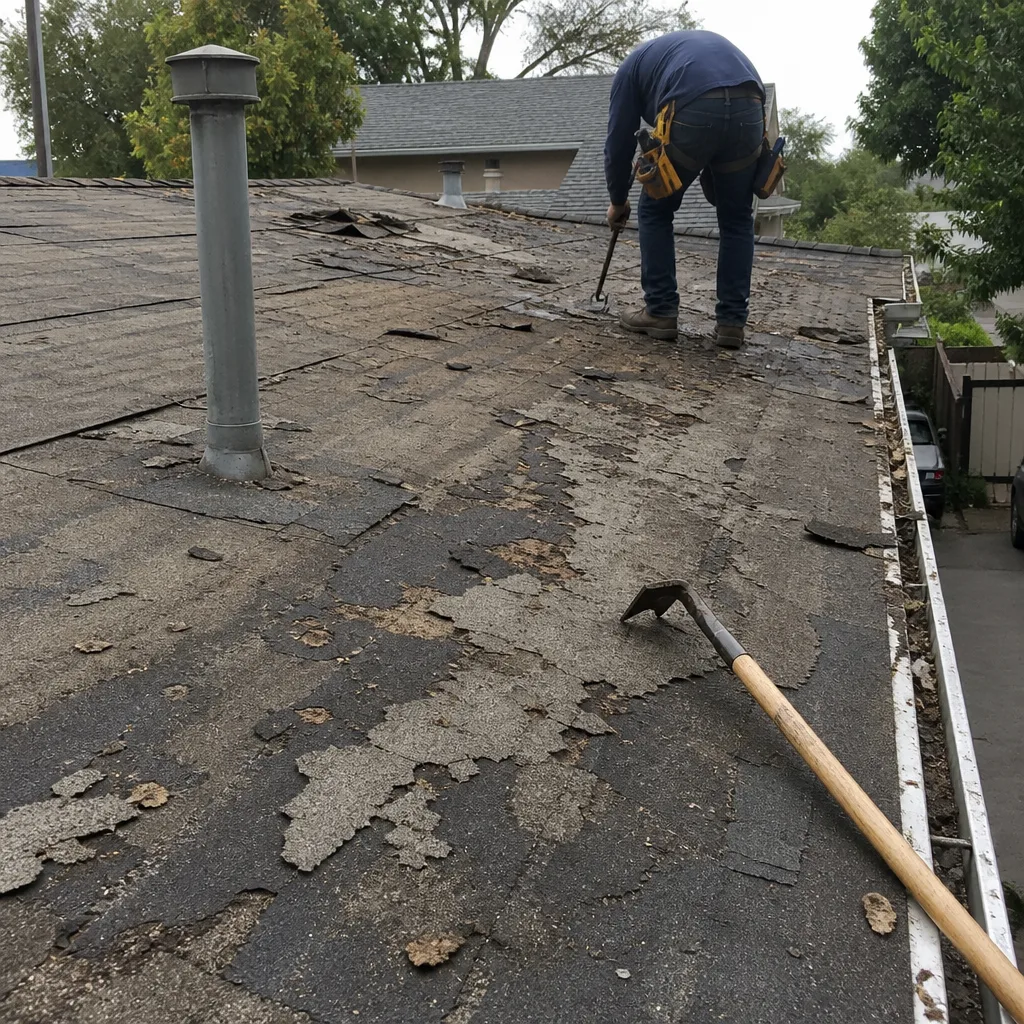
For repairs, the scope is narrower: re-flashing a pipe boot, replacing a section of damaged shingles, sealing a leak at a valley, repairing a piece of step flashing along a chimney. These are legitimate fixes, not band-aids, as long as the surrounding material is sound. We handle Roof Repair in Van Nuys for precisely these situations. The key is to verify the rest of the roof isn’t quietly failing while you fix the loud problem.
Common Mistakes to Avoid
- Installing the cheapest shingle and expecting it to last: In Van Nuys, a three-tab shingle installed on a south-facing slope can show granule loss within three years. The Valley heat does not forgive cheap materials, and a “deal” on labor usually means corners were cut on the underlayment or ventilation.
- Ignoring attic ventilation: A new roof over an unventilated attic will bake from underneath and fail early. Many original Van Nuys homes have inadequate intake and exhaust ventilation, and a replacement without ventilation upgrades just repeats the cycle.
- Skipping the permit: An unpermitted roof in Los Angeles becomes a problem when you sell, refinance, or file an insurance claim. The city keeps records, and buyers’ inspectors check them.
- Replacing tile with shingles without checking the structure: If a tile roof is removed, the home’s framing may have been designed for the tile’s weight, not the other way around. But removing tile and adding a lightweight shingle can still require structural adjustments if the original deck spacing was built for tile battens, not shingle nailing.
- Trusting a roofing quote that doesn’t include deck repair: In Van Nuys, most roofs over twenty-five years old have at least one section of compromised decking. A quote that assumes a perfectly clean deck is a quote that will change once the old material comes off. Ask upfront whether deck replacement is included or an add-on, and what the per-sheet cost is.
- Choosing a product because one brand was pushed: If a contractor only installs one manufacturer, you’re getting the brand that’s convenient for them, not necessarily the one that’s right for your roof. Seven leading brands, one crew that knows them all: that’s the alternative.
See the difference
 Before
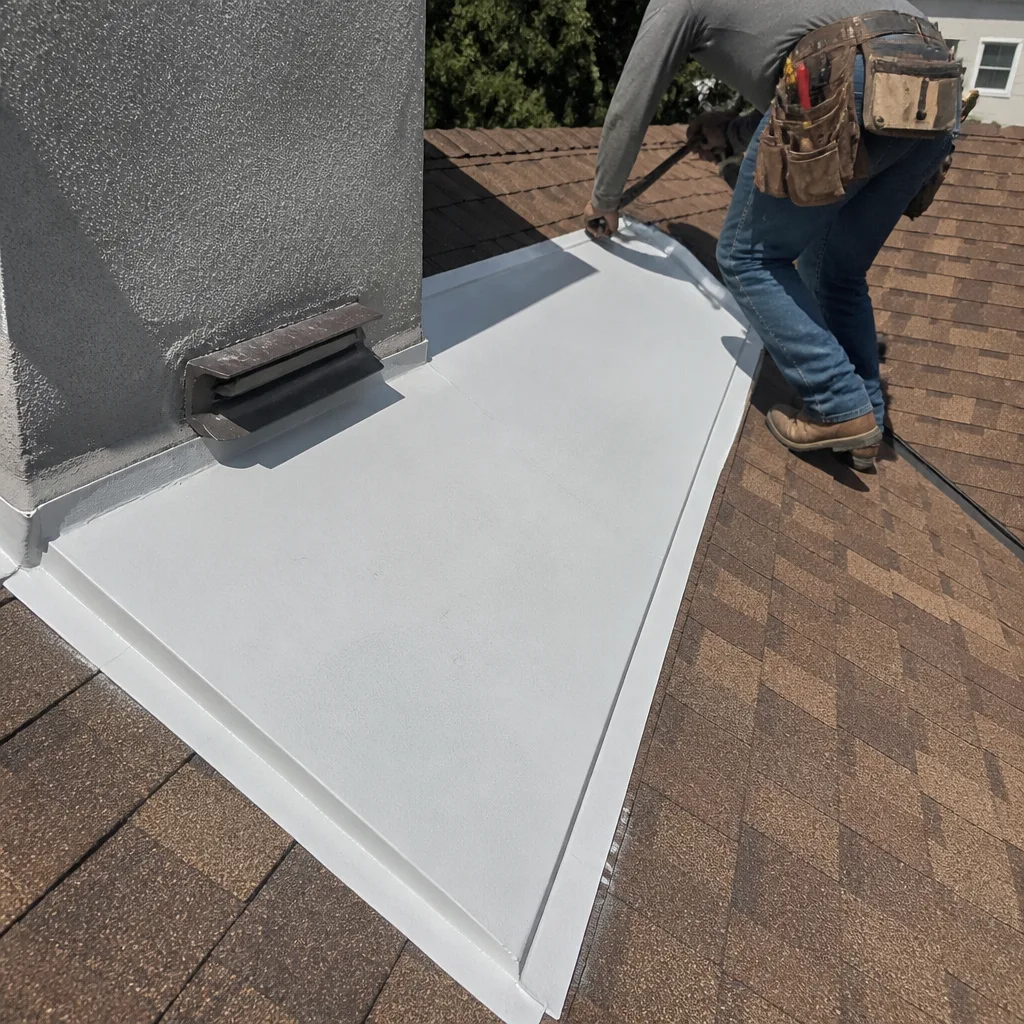 After
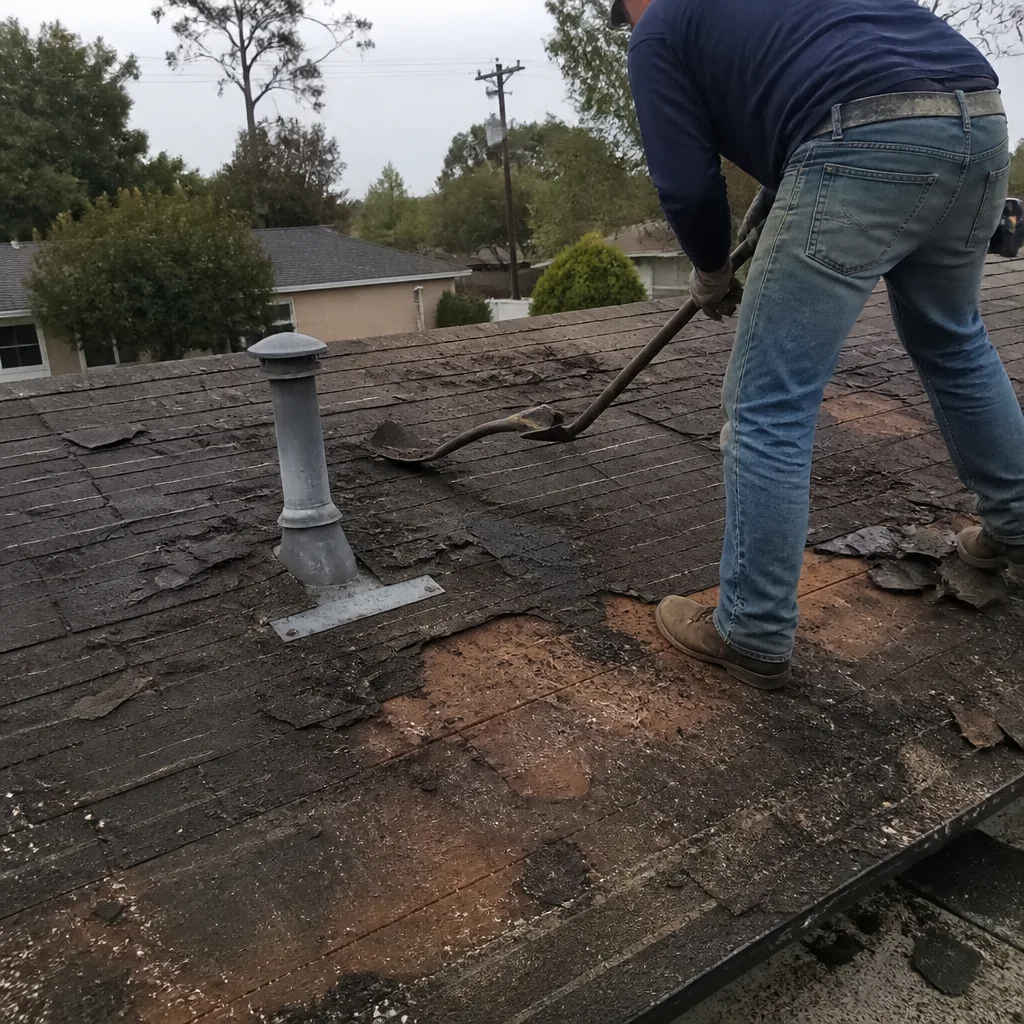 Before
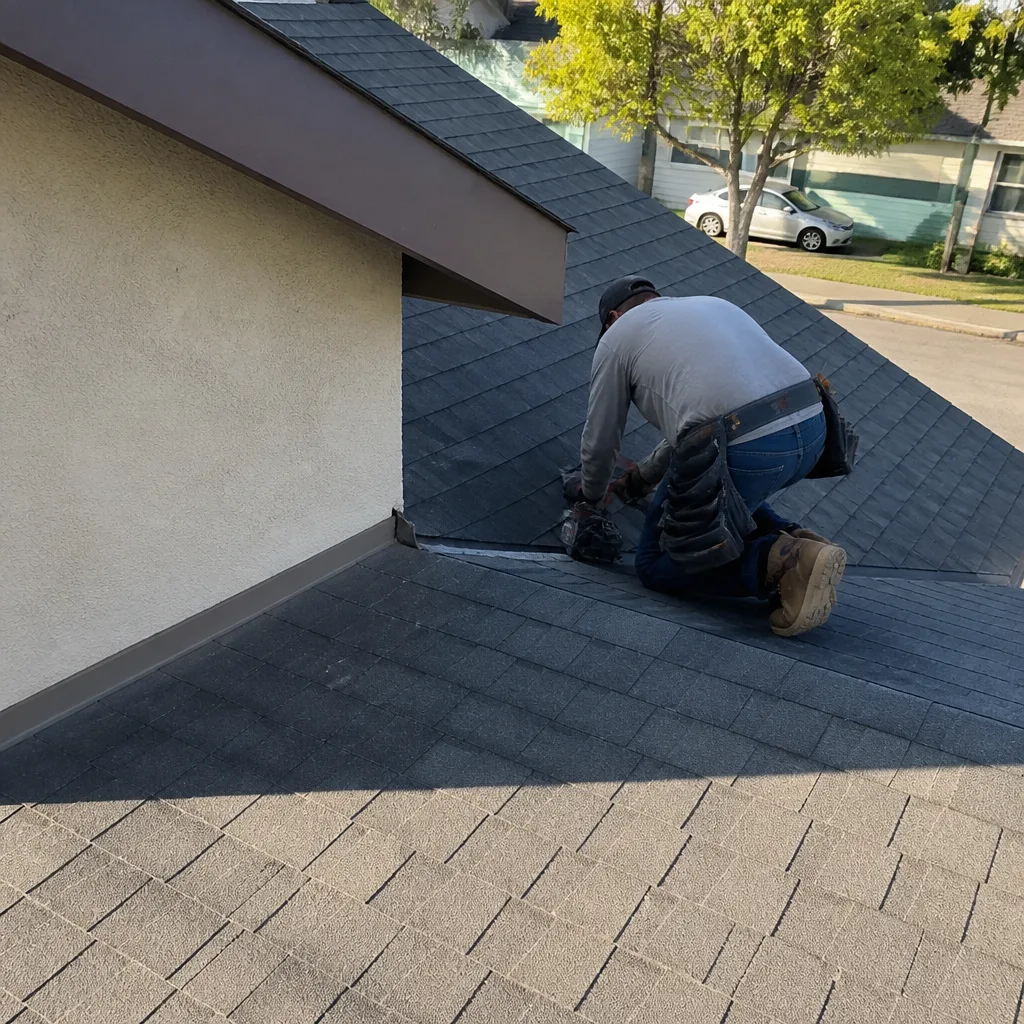 After
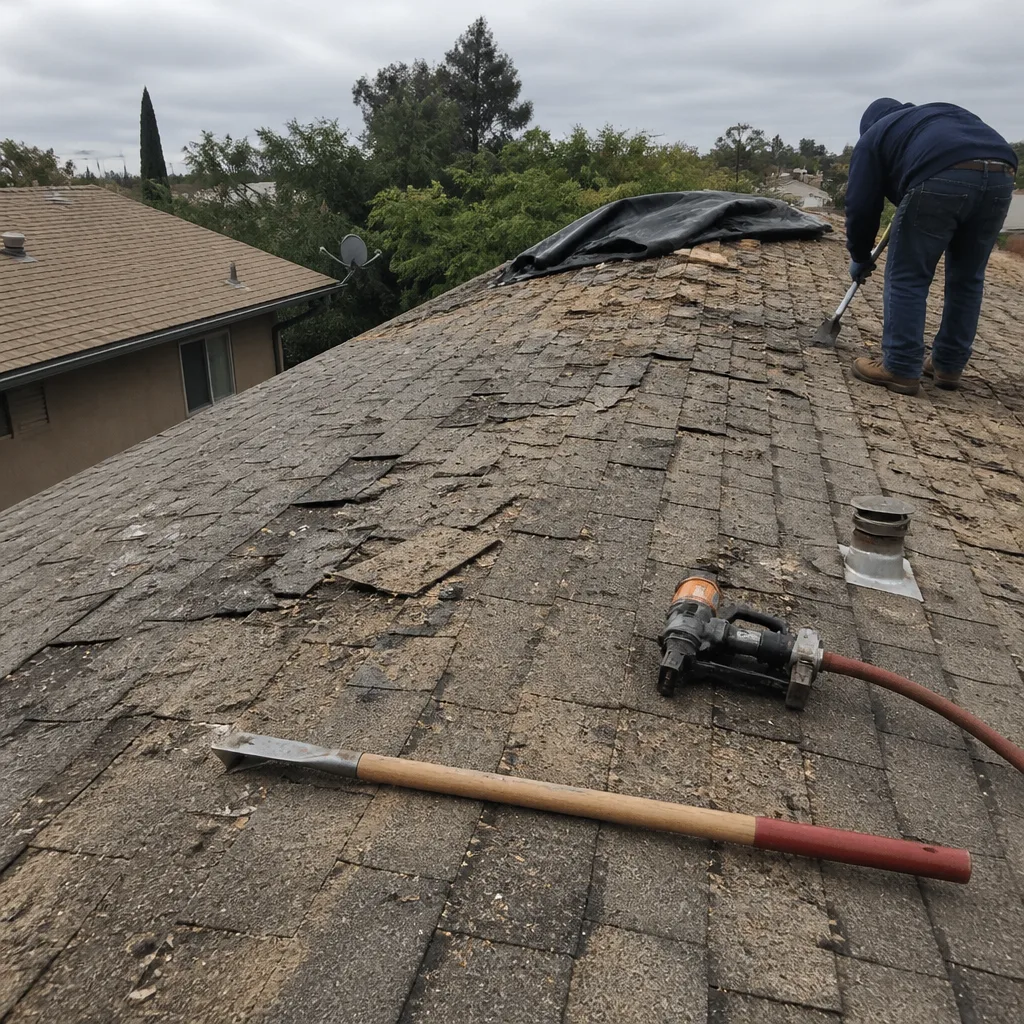 Before
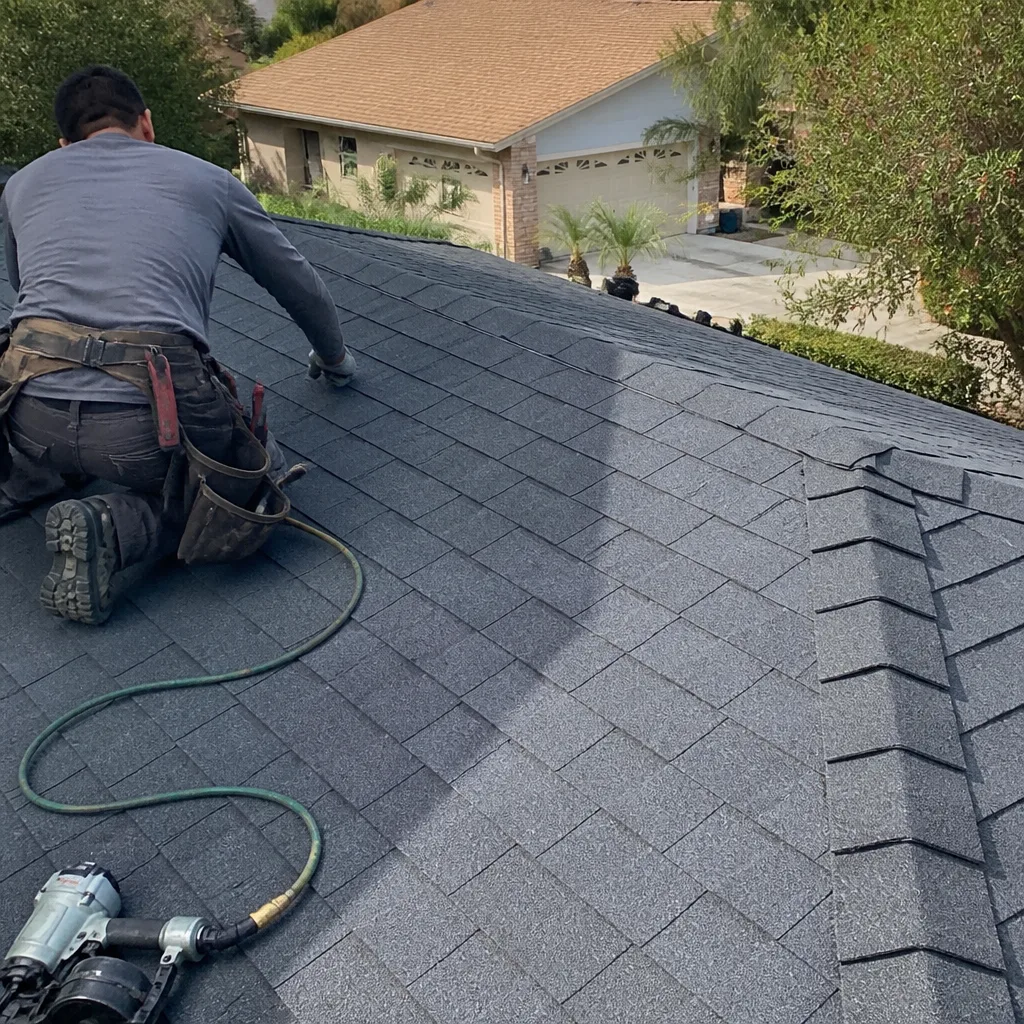 After
When to Call a Professional
Call a professional when you see water staining on a ceiling in Van Nuys after a rain, when granules are collecting in your gutters at a suspicious rate, when you can see daylight through the roof from inside the attic, or when you see shingles curling, cracked, or missing after a Santa Ana wind event. If your roof is over fifteen years old in the Valley and you haven’t had it inspected, that’s another reason to schedule one. Roof work on a two-story Van Nuys home is genuinely dangerous, and high-slope work with power tools and hot materials is not a weekend project. If you’re ready to hire help, here’s How to Hire a Roofing Contractor in Van Nuys: A Step-by-Step Guide. Van Nuys Roofing Co offers free estimates in Van Nuys; call (866) 321-6172 to schedule one.
Frequently Asked Questions
For a typical Van Nuys single-family home, roof replacement runs from roughly $14,000 to $35,000 depending on the material, the roof’s pitch, whether deck repair is needed, and the home’s size. Asphalt shingle replacement on a 1,600 square foot ranch tends to fall in the $14,000 to $22,000 range; tile or metal can push into the $25,000 to $35,000 territory. Call (866) 321-6172 for an exact quote; estimates are free.
Repair if the roof is under ten years old, the damage is localized, and the deck is sound; replace if the roof is over twenty years old, has failed in multiple areas, or has rot beneath the surface. The deciding factor is usually what the inspection reveals once the material is examined up close. We tell Van Nuys homeowners which one actually makes sense, not which one makes us more money.
Yes, the City of Los Angeles requires a permit for full roof replacement and for most repairs beyond small, isolated patching. LADBS reviews the work for fire rating, wind uplift, and Title 24 cool roof compliance before signing off on the final inspection.
Concrete and clay tile outperform everything else under sustained Van Nuys heat and UV exposure, with lifespans measured in fifty-plus years in this climate when the underlayment and flashing are installed correctly. Among shingles, architectural profiles from GAF, CertainTeed, and Owens Corning hold up better than three-tab products, though real-world lifespan in Van Nuys still runs shorter than manufacturer estimates.
Yes, but the roof should be evaluated first. If the roofing material has fewer than eight to ten years of useful life left in Van Nuys conditions, installing solar on top means paying to remove and reinstall the panels when the roof needs replacement. A pre-solar roof inspection is a standard part of responsible solar planning.
The Valley’s heat island effect and thermal inversion layer mean rooftop surfaces in Van Nuys reach higher temperatures and endure more UV exposure than coastal areas, while nighttime cooling is less effective. That combination accelerates asphalt aging, granule loss, and seal failures compared to the same product installed in Santa Monica or Culver City.
The Bottom Line
Roofing in Van Nuys is a different game than roofing in the rest of Los Angeles. The heat is more aggressive, the UV is more intense, the ember risk from nearby wildfire zones is real, and the housing stock is old enough that what’s underneath the roof often needs as much attention as the surface. Start with an inspection. Choose materials based on how they’ll actually perform in the Valley, not what a manufacturer’s national marketing says. Work with a contractor who can offer material-neutral recommendations across multiple brands rather than pushing one product line. GAF, CertainTeed, Owens Corning, IKO, Atlas, Tamko, Boral: if it goes on a roof, we know it. Van Nuys Roofing Co home offers free estimates on repair, replacement, and inspection. Call (866) 321-6172 to schedule.
Written by the team at Van Nuys Roofing Co, serving Van Nuys since 2015.